

Plant Hardiness Information
The USDA Hardiness Zone map is based on average winter low temperatures and doesn't consider rare extremes. It is truly difficult trying to assign a hardiness zone to all perennial plants, especially when using the minimal 10 USDA Zones. This is why we find it critical to differentiate between the "a" and "b" zones whenever possible. Too many plant nurseries unfortunately simply use the standard rule of perennial plant hardiness - if you don't know the zones, it becomes hardy from Zone 4-9 by default.
A drawback to growing new and different perennial plants is that there is no information on their hardiness. Our hardiness zone information (both cold and heat) is the result of trials by us and other perennial plant collectors around the country. You will sometimes see the word “guessing” in our hardiness ratings. It implies that we are making a conservative guess based
on our experience, and the plant may actually be 1 or 2 zones hardier than our estimate. Or it may not be. The only way for us all to find out is to have more gardeners grow the plant and let everyone know how it performed in their area using the comment section.
Shop by hardiness zone
-

Plants for Zone 2
Zone 2a and Zone 2b Plants Some species of Cypripedium reginae and...
-

Plants for Zone 3
Zone 3a and Zone 3b Plants Many of the perennial plants in...
-

Plants for Zone 4
Zone 4a and Zone 4b Plants Many of the perennial plants in...
-

Plants for Zone 5
Zone 5a and Zone 5b Plants Many of the perennial plants in...
-

Plants for Zone 6
Zone 6a and Zone 6b Plants Many of the perennial plants in...
-

Plants for Zone 7
Zone 7a and Zone 7b Plants Many of the perennial plants in...
-

Plants for Zone 8
Zone 8a and Zone 8b Plants Many of the perennial plants in...
-

Plants for Zone 9
Zone 9a and Zone 9b Plants Many of the perennial plants in...
-

Plants for Zone 10
Zone 10a and Zone 10b Plants Many of the perennial plants in...


Factors that affect plant hardiness
The USDA Hardiness Zone map is based on average winter low temperatures and doesn't take into account rare extremes. While the map is based on a tremendous amount of data, it isn't perfect. Cold temperature is not the only factor that affects plant hardiness. After several years of mild winters, regions may exhibit "zone creep," where perennial plants seem to be fine that are not truly suited to even "normal" winters.
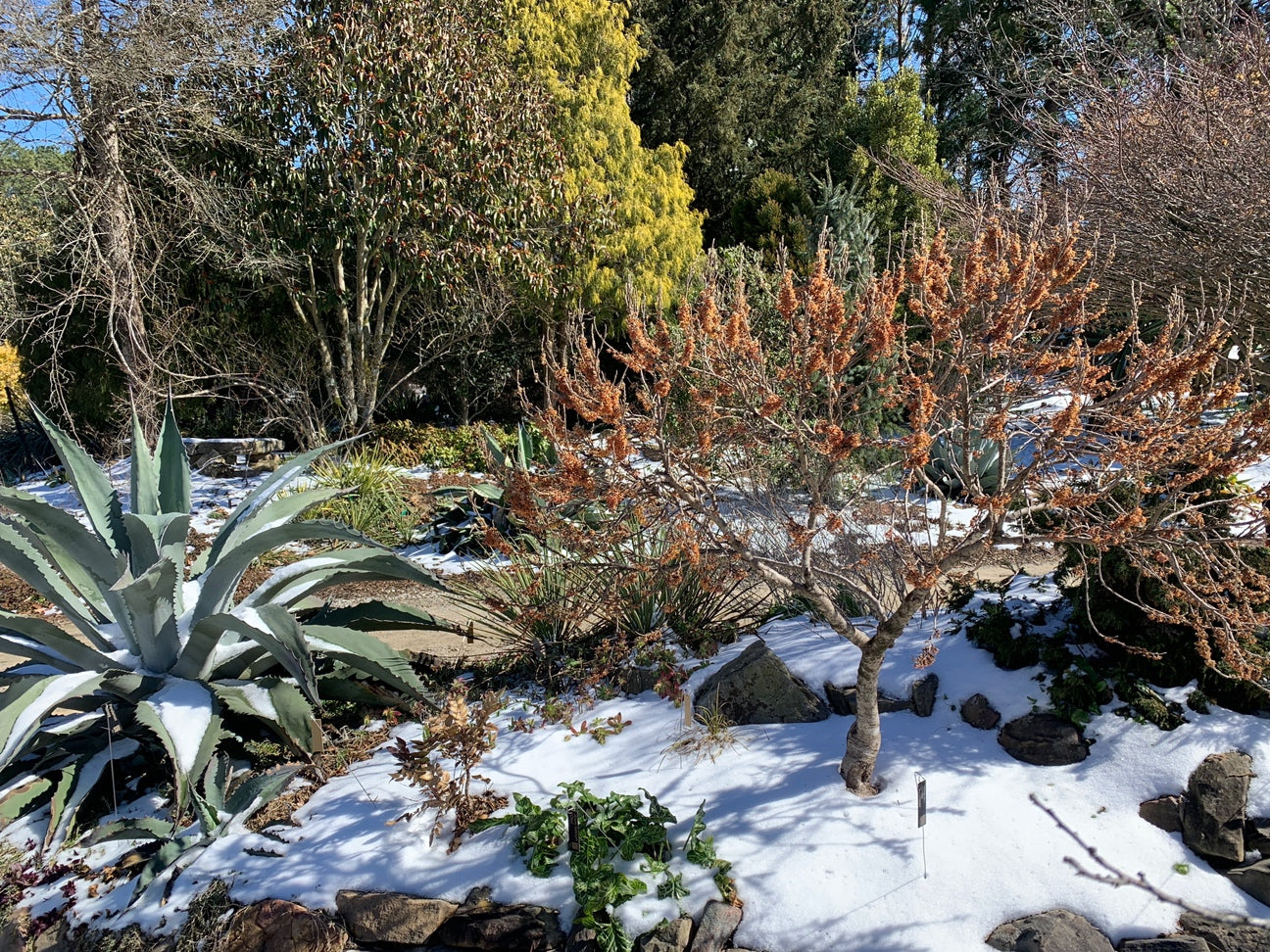
A one-night cold snap is not the same as a week-long freeze, even if the same low temperature is reached in both cases. Many hardy perennials can repair cellular damage caused by 0F (-18C) if the temperature rises rapidly. But if the temperature remains low for several days, cell damage may continue and result in the death of the plant. In areas with lots of snow cover, perennial plants may survive normally deadly winter temperatures, due to the insulating effect of the snow. Layers of ice, however, are different, as they tend to keep oxygen from reaching the soil and can result in the death of many typically hardy perennial plants.
In areas with warm autumn nights perennial plants may die from a sudden freeze. This death does not occur from the actual temperatures, but instead from the plant not being acclimated to the cold weather. Plants in cooler zones that have hardened off earlier can survive much lower temperatures. We see the exact same thing in some late spring frosts. After a certain number of hours at a specified temperature, each type of plant will switch from a dormant winter mode to a growing spring mode. It is at this point that winter hardiness is lost. If a late frost occurs while the plant is still in its dormant mode, there is little, if any, damage. If the late frost occurs after the plants have switched to active growing mode, even a mature tree may be killed.
Another overlooked, but very important factor, is winter moisture. While many perennial plants, especially Southwest natives, can survive incredibly low temperatures, they cannot tolerate rain during the winter dormant season, especially when temperatures drop into the teens and below.
Another phenomenon, seen in England and in the cool areas of the West Coast of the US is the difference in perennial plant winter hardiness due to a lack of summer heat. In many plants native to warmer climates, summer heat causes increased sugar production, which allows the plants to survive more stress in the winter. In areas without summer heat, a particular perennial plant may only be hardy to 20F (-7C), while in an area with hot summers, the same plant may easily be hardy to 0F (-18C).
Many reports of plants that didn't survive the winter temperatures, are actually perennial plants that have become dinner to hungry rodents. Be particularly aware of voles - small rodents that tunnel around your plants (especially the expensive ones), and snack on the roots, tubers, bulbs, and rhizomes. A dead perennial plant with a quarter-sized tunnel nearby is a sure sign of voles. Check with your local extension service on control methods available in your area.
For more in-depth information about plant hardiness, check out our article About Plant Hardiness Zone Maps
Additional factors
-
Heat hardiness
Heat hardiness is an issue that has been discussed recently, and while it is critical to those of us in warmer zones, the AHS Heat Zone map is a laughable excuse for a solution. Their heat zones are based only on the number of days above 86F (30C). The heat map does not integrate data for humidity, or the variance between day and night temperatures which is far more important in determining how far south a perennial plant will grow. We have continued to use the second number from the USDA map as our heat indicator number.
-
Fertilizers
Research has indicated that a fall application of a high potassium fertilizer (assuming the plants or soils are deficient) aids in winter survivability of many perennial plants. Conversely, an early fall application of nitrogen can make plants which are not induced into dormancy by day length continue to grow, causing them to be more susceptible to winter damage.
-
Microclimates
If you enjoy growing perennial plants in zones which are too cold, try to create microclimates. Microclimates are areas of your garden that are particularly protected, such as near a brick wall, near heat vents from the house, near a body of water, between two structures, in courtyards, or other such areas. Good plant nuts can usually squeeze out an extra zone in either
direction... that should build some egos! -
Growing marginal plants
Picking the right site for the marginally hardy plants is critical. Marginal evergreens should be located on the north side of a structure or in some shade in the wintertime. With the ground frozen, the evergreen foliage is desiccated since water given off to the sun and wind cannot be replenished. With deciduous marginal plants, a location in a sunny spot will allow the ground to warm, often making the difference in survivability.
Contribute to our hardiness data
The easiest way to share specific plant hardiness information is to post a review on that plant's product listing. The reviews are moderated and we approve all comments that provide valuable information regardless of the star rating. You can also contact us directly by phone (919) 772-4794, email sales@plantdelights.com, fax (919) 662-0370, and post 9241 Sauls Road, Raleigh NC, 27603.