

How can you not love plants that eat bugs?
Although there are millions of Venus flytraps in containers and in gardens thanks to tissue culture, there are less than 40,000 individual Venus flytrap plants left in the wild due to development and plant poachers. We only sell ethically propagated Venus flytraps from tissue culture.
-
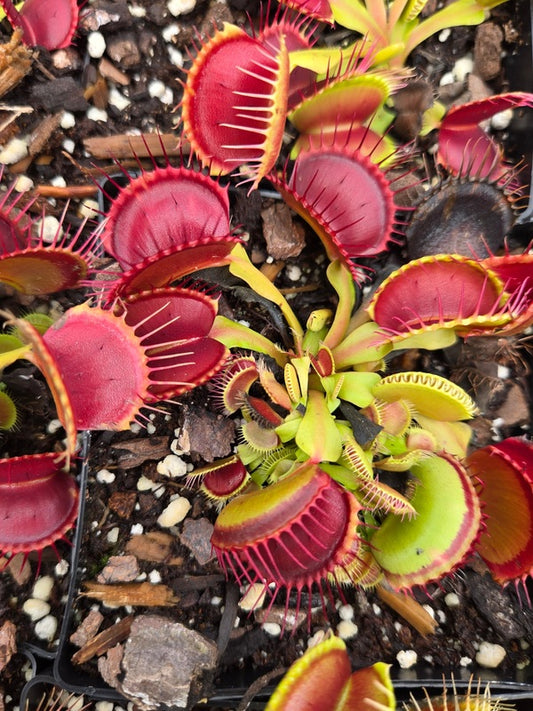
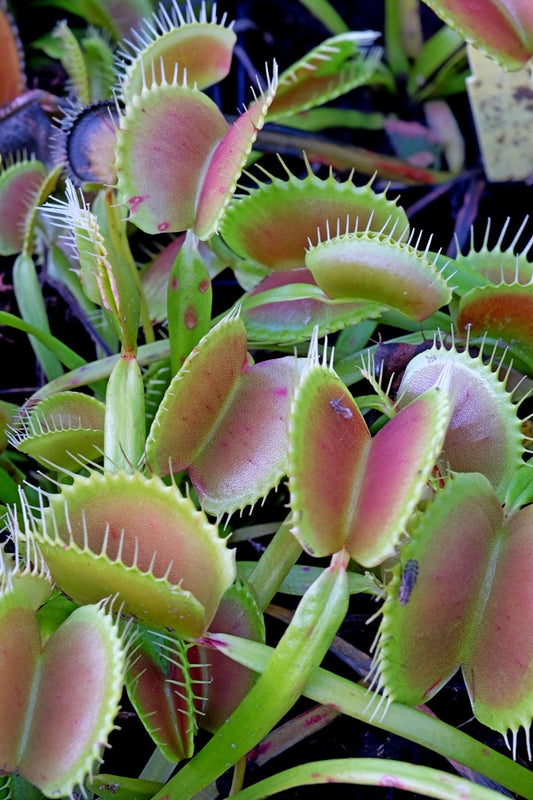
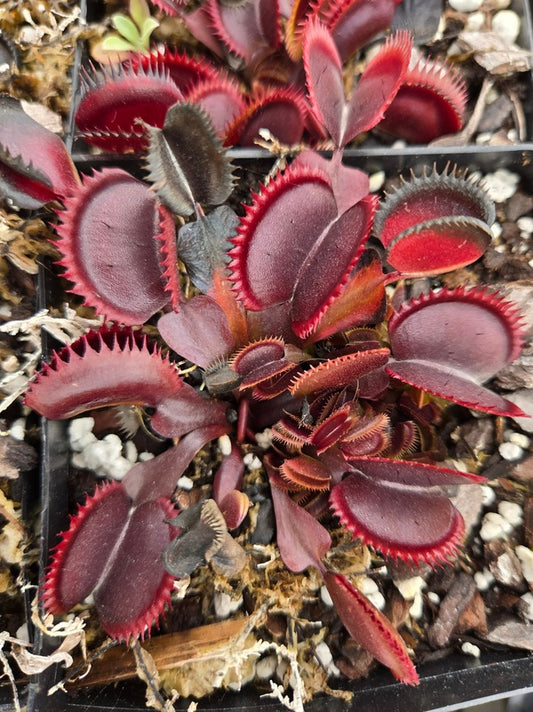
Dionaea muscipula 'B-52'
Item #: 17899
Zones: 5a to 9b
Dormancy: Winter
Height: 4" tall
Culture: Sun
Origin: United States
Pot Size: 3.5" pot (24 fl. oz/0.7 L)
Regular price $30.00Regular priceUnit price per -
Dionaea muscipula 'King Henry'
Item #: 3700
Zones: 5a to 9b
Dormancy: Winter
Height: 6" tall
Culture: Sun
Origin: United States
Pot Size: 3.5" pot (24 fl. oz/0.7 L)
Regular price $30.00Regular priceUnit price per -
Dionaea muscipula 'Red Piranha'
Item #: 17900
Zones: 5a to 9b
Dormancy: Winter
Height: 4" tall
Culture: Sun
Origin: United States
Pot Size: 3.5" pot (24 fl. oz/0.7 L)
Regular price $30.00Regular priceUnit price per

More Information About Dionaea
How to grow Venus Fly Trap
The key to successfully cultivating your Venus fly trap is to mimic its native North Carolina swamp habitat...with hot humid summers and acidic, nutrient-poor, consistently moist (not wet) soils. While Venus fly traps can be grown as a house plant in bright light, they must have a cold winter dormancy to survive long term so they are better grown in an unheated greenhouse or outdoors.
What type of soil is best for Dionaea?
We produce our Venus fly traps in pure peat moss which not only holds water well, but is naturally acidic. During the growing season, we do not allow our containerized Venus fly traps to dry out, and during winter we drop the temperature to 32-38 degrees F, keeping them just barely moist.
Do Venus flytraps need fertilizer?
Venus fly traps never need fertilizer since they get all the nutrients they need from the decomposing peat moss and from stray insects that they catch. Never feed Venus fly traps meat...animal flesh has much more fat in it than insects do and will cause the flytrap to rot and die.
Venus fly trap (Dionaea muscipula) is undoubtedly one of the most exotic plant there is, fascinating us with its carnivorous nature and lightning-quick traps. Venus fly traps are American native plants, growing wild alongside sarracenia (pitcher plants) in low, sandy, nutrient-poor areas within a 90 mile radius of Wilmington, North Carolina.
Buy only ethically propagated Venus flytraps
Although there are millions of Venus fly traps in containers and in gardens thanks to tissue culture, there are less than 40,000 individual Venus flytrap plants left in the wild due to development and plant poachers. We hope you will support ethical production and buy Venus fly trap only from folks like us who sell nursery-propagated plants.