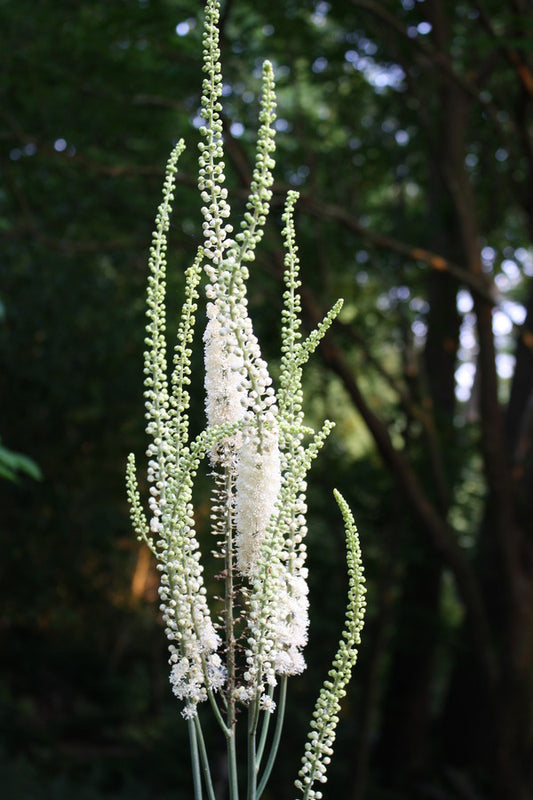
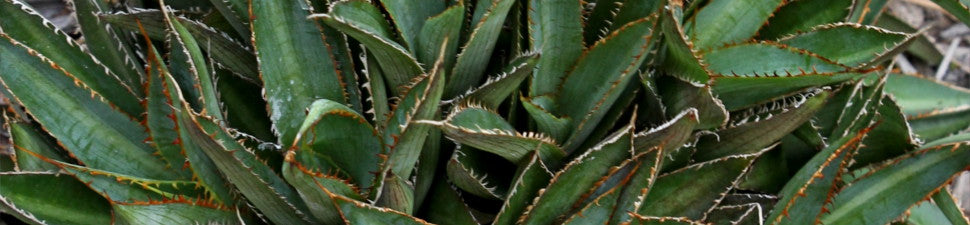
Plant rabbit resistant plants to keep Br'er Rabbit out of your briar patch, wemove the "wascally" Bugs Bunny, and halt the "hippity hoppity" Peter Cottontail...including Baptisia, Hellebore, Iris, Paeonia, Salvia, and Veronica.
Other than deer, the most hated garden critter has to be the rabbit. Despite their small size, rabbits can devour garden plants and will happily eat your prized hosta down to a mere nub. Here at Plant Delights Nursery, we have wide range of perennials for sale and have scoured our catalog to create a list of rabbit resistant plants for the garden.
Read More About Rabbit Resistant Plants
Like deer, rabbits will eat almost anything, so any list of rabbit resistant plants is not foolproof…especially because rabbits don't read lists. Bunnies may nibble on plants that a deer won't touch, but in general, the list of rabbit resistant plants strongly overlaps with the list of deer-resistant plants. The best rabbit resistant plants have one or more of the following characteristics: spiny, rough, hairy, thick, leathery, woody, toxic, bitter, or spicy leaves/stems.
The textured (rough, spiny, hairy, leathery) rabbit resistant plants include perennials such as Achillea, Agave, Juniperus, and Yucca. The distasteful rabbit resistant plants include culinary perennials such as Agastache, Allium, Lamium, Lavandula, Monarda, Nepeta, Origanum, Rosmarinus, and Salvia, but also include caustic, acrid or just plain yucky-tasting plants like Caryopteris and toxic plants like Aconitum, Artemisia, Asclepias, and Digitalis. Plant groups like ferns and ornamental grasses repel rabbits well. When you are ready to buy rabbit resistant plants for your garden, check out our online list of rabbit resistant plants for sale below.
Complete list of rabbit resistant plants at Plant Delights Nursery:
Since 1988, Plant Delights Nursery has been the choice of serious gardeners and plant collectors looking for the best and rarest perennial plants. We are pleased to have received the Perennial Plant Association Retail Award in 2011, the American Horticulture Society Commercial Award in 2002, and to have been selected as one of the Best Mail Order Plant Nurseries - Garden Design Magazine 2010. Welcome to our family of plant lovers!
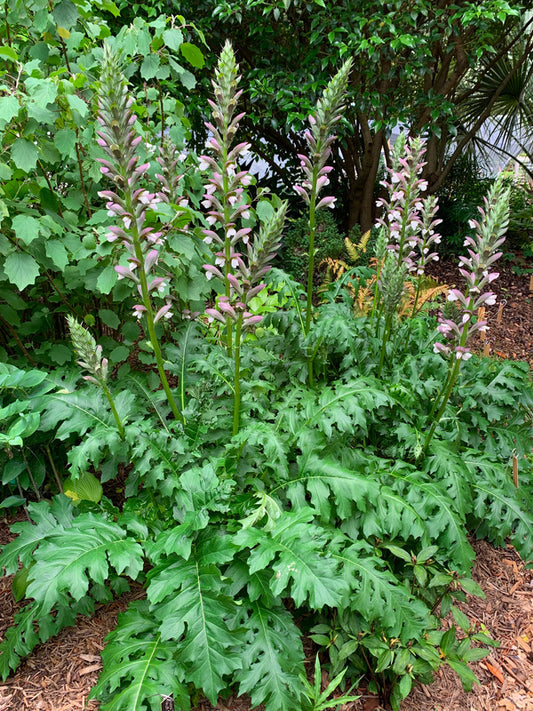
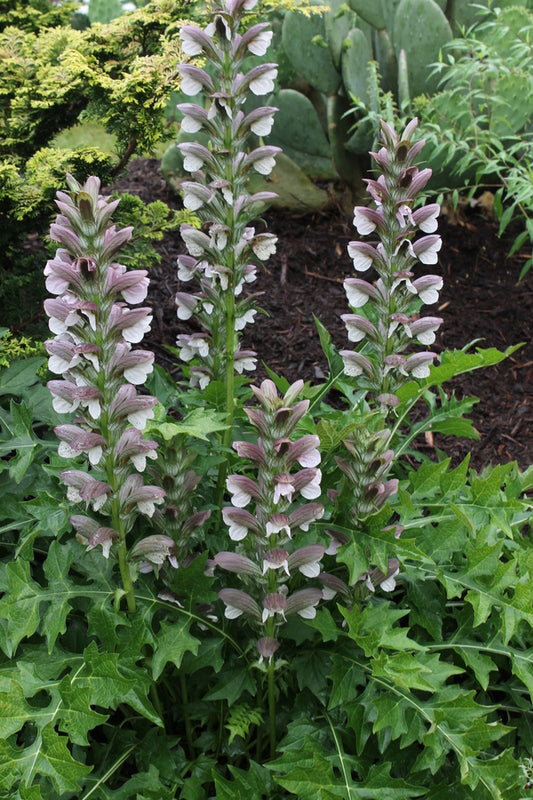
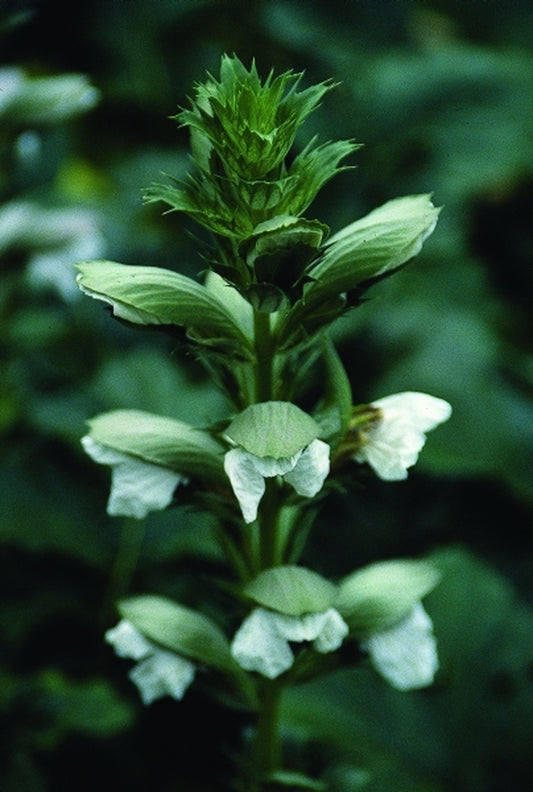
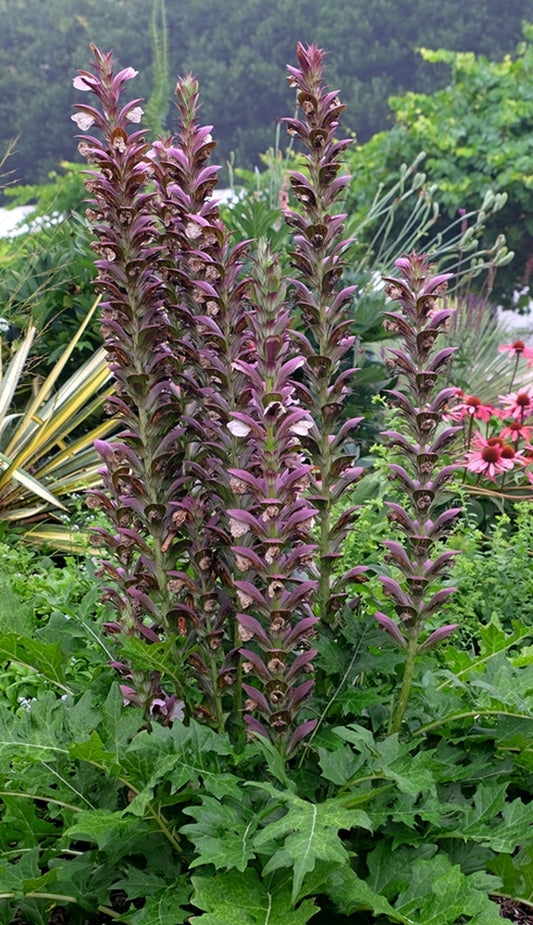
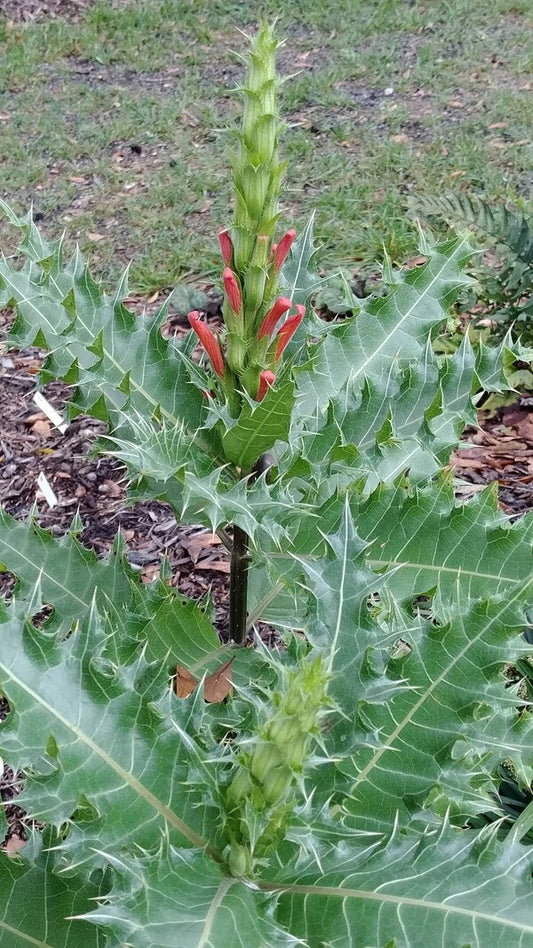
Although some taxonomists have lumped Acanthus hungaricus into Acanthus balcanicus, we feel that there is a horticultural difference. Picture a tropical-looking, dark green, glossy, thick-leaf fern forming an 18" tall x 30" wide deer-resistant perennial and you've got an acanthus. Acanthus balcanicus v. hungaricus is topped in early spring with a 3' tall spike composed of purple, pink and white tricolor turtleheads...very unique! Plant this where you want it to stay. While it is easy to move, small root pieces that are left behind keep on giving and giving and giving... Pot Size: 3.5" (24 fl. oz/709.77 ml)
This charming little bear's breech suffers from a major identity crisis. Some "experts" consider Acanthus caroli-alexandri a form of Acanthus hungaricus, while others propose a possible hybrid between Acanthus spinosus and Acanthus hirsutus. Don't you just love those taxonomists? Regardless of its identity, Acanthus caroli-alexandri is unique among acanthus with its finely cut, black-green, deer-resistant foliage, making a small 18" tall x 2' wide rosette. In late spring, the clumps are topped with compact 3' tall spikes with the typical hooded, white-and-purple, spiny flowers...outstanding for texture and structure in the small garden. Pot Size: 3.5" (24 fl. oz/709.77 ml)
This delightfully saucy acanthus has paraded in the trade for years as Acanthus spinosus, but is nothing like that species...i.e., it's missing the spines. It appears perfectly intermediate between Acanthus hungaricus and Acanthus spinosus and is probably a hybrid, hence we have assigned a cultivar name commemorating its widespread culture in Holland under the wrong name. The 1' tall x 2' wide mass of deeply incised, black-green, deer-resistant leaves makes a wonderful clump topped in late spring with 2' tall spikes of white flowers hidden by spiny purple hoods. Sunny, slightly acid to alkaline conditions are best and be aware that unlike vasectomies, cutting the translocation system (roots) causes more babies. Pot Size: 3.5" (24 fl. oz/709.77 ml)
In 2011, while Israeli nurseryman Moti Kopilovitch was visiting and discussing our acanthus selections, I explained that most Acanthus mollis we tried did not survive our hot, humid summers. Moti was kind enough to share seed of a form that thrives in Israel's hot, zone 10-11 climate and we are thrilled to share the plants with you. We planted several of this Acanthus mollis in the ground to watch, so we'll all grow them for the first time together. Acanthus mollis makes a 2' tall x 3' wide clump of broad, glossy-green, deeply indented leaves that goes into a midsummer lull but kicks into high gear with the return of cooler nights. The clumps are topped with 4' tall spikes of spiny purple and white flowers. Acanthus is propagated from root cuttings, so if you dig around a mature acanthus, you will create cuttings. Pot Size: 3.5" (24 fl. oz/709.77 ml)
I spent years lusting after the breathtaking variegated Acanthus 'Tasmanian Angel', so finally, not only do we have it, but we have enough to share. This unusual selection of the European Acanthus mollis comes via a gardener in Tasmania. The bold-textured, dark green leaves with deeply scalloped edges are highlighted by an irregular border that emerges creamy gold, then changes to white as the leaves mature. The older leaves eventually lose most of the coloration. When the 3' wide deer-resistant clumps mature, they are topped with 5' tall spikes of true pink flowers...simply stunning! Acanthus 'Tasmanian Angel' must have some sun to survive...also a rich, moist soil is preferred. Bear's breech is an evergreen perennial at the southern end of its range. Pot Size: 3.5" (24 fl. oz/709.77 ml)
Acanthus 'Morning Candle' is a new free-flowering selection from Holland's Dirk de Winter of New Generation Plants, that is reportedly a hybrid of Acanthus spinosus and Acanthus mollis. Unfortunately, most growers wouldn't know true Acanthus spinosus if it stuck 'em in the rear. We think this is more likely an Acanthus hungaricus x Acanthus mollis hybrid. For us, the 3' wide clump of deeply-scalloped green leaves has performed extremely well despite several weeks above 100 degrees F. The compact deer-resistant clumps are topped, starting in early May (NC), with 4'+ tall flower spikes of purple and white hooded flowers...very nice! We've found Acanthus 'Morning Candle' to still be free-flowering, despite all the new EU austerity measures. Pot Size: 3.5" (24 fl. oz/709.77 ml)
We feel this import by Oregon's Chet Tompkins from a gardener in China is the finest acanthus on the market. Acanthus 'Summer Beauty' is a hybrid (probably Acanthus mollis x Acanthus spinosus) that grows well in our hot summers where Acanthus mollis fails miserably. The 4-6' wide clump of giant, glossy, dark green foliage is much more cutleaf than Acanthus mollis. In summer, the tropical-looking, deer-resistant clumps are topped with 6' tall spikes of white flowers surrounded by wonderful purple calyces...absolutely superb, and soon to be an industry standard! Pot Size: 3.5" (24 fl. oz/709.77 ml)
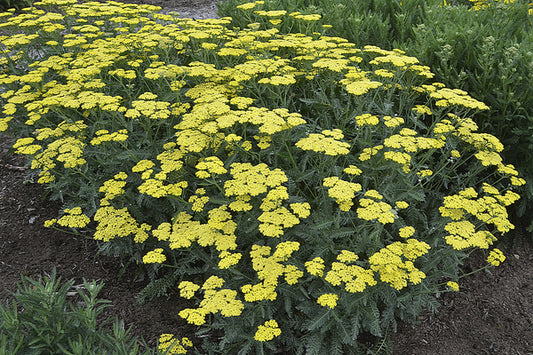
Anthea yarrow is a 1993 introduction...a discovery by the late Alan Bloom of England, who found it growing in a patch of Achillea 'Moonshine'. Achillea 'Anblo', marketed under the equally strange name 'Anthea', is a noticeable improvement over most of the yarrows we have tried...it actually survives here without trying to take over the garden. The basal rosette of cutleaf silvery foliage is topped in late spring with very erect 30" stalks, holding nice flower clusters of light butter yellow. This is a great addition to the softer colored parts of the border. Pot Size: 3.5" (24 fl. oz/709.77 ml)
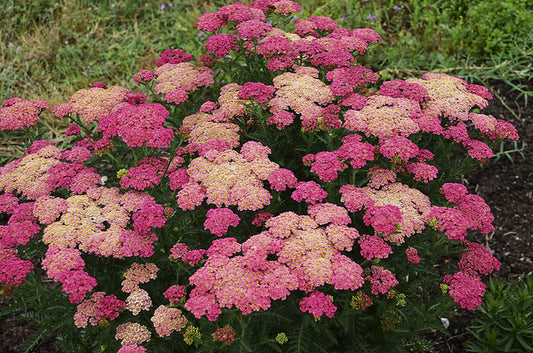
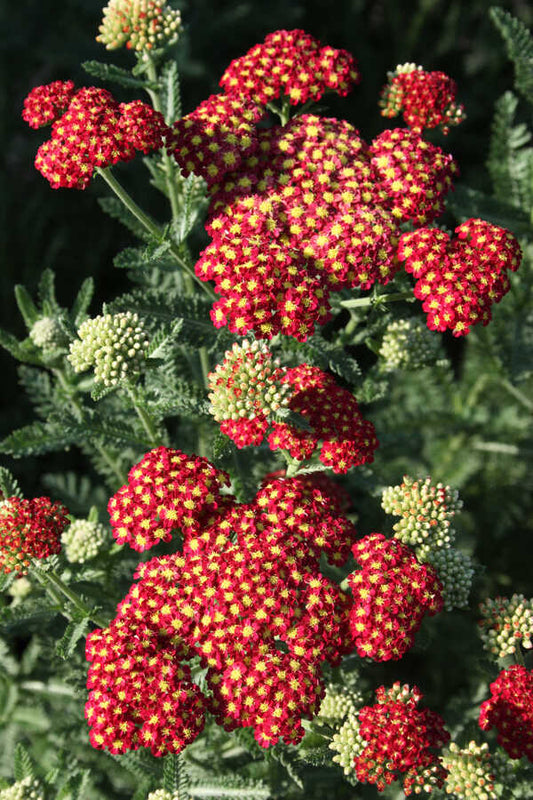
We've tried many yarrows through the years and most have struggled through our hot humid summers, with the exception of Achillea 'Strawberry Seduction'. This Achillea millefolium hybrid (possibly with Achillea clypeolata) was selected in 2001 by Holland's Michiel Zwaan, who bred it from the Achillea Summer Pastels seed series. Achillea 'Strawberry Seduction' is a long-flowering selection that begins flowering in June with strong 2' tall well-branched stems, topped with clusters of colorfast red flowers, highlighted with small yellow centers. I've experienced strawberry reductions before, but admit that I find the imagery of a strawberry seduction...berry interesting. Pot Size: 3.5" (24 fl. oz/709.77 ml)
When my friend Gert Fortgens of Arboretum Trompenburg in Holland told me about his cross of the North American native Agastache foeniculum with the Korean Agastache rugosa, the offspring sounded too good to be true. However, after trialing Agastache 'Blue Fortune' in our dry garden, I consider it one of the finest new perennials in years! In spring, the strong new stalks shoot upward to 3' tall, clothed with fuzzy, licorice-scented fragrant leaves. From early spring through summer, the stems are topped with hundreds of large bottlebrush, blue-lavender flowers that attract a stunning array of pollinators, including hummingbirds! Agastache 'Blue Fortune' needs an open, well-drained site for best performance. Pot Size: 3.5" (24 fl. oz/709.77 ml)
This Terra Nova introduction is one of the first of the brightly-colored agastache hybrids to survive our NC summers. Agastache 'Cotton Candy' forms a 2' tall x 3' wide drought-tolerant clump of upright green stems, each clothed in small, but very minty-fragranced leaves. From spring through fall, the stems are topped with dense clusters of small pink flowers emerging from the dark pink-tipped calyces. Agastache 'Cotton Candy' is a magnet for attracting both butterflies and hummingbirds...we recommend a flight control tower within a 100' radius. Good drainage is essential for long-term survivability. Pot Size: 3.5" (24 fl. oz/709.77 ml)
Agastache foeniculum 'Get Riehl' comes from an early 1990s trip when I visited Iowa City plantsman, Frank Riehl. Sharing a love of native habitats, Frank took me to a nearby prairie remnant where I first saw anise hyssop growing in the wild. Those cutting-grown plants have remained in our garden for over two decades, so we decided that it was time to share. The deciduous Agastache foeniculum 'Get Riehl' makes a wispy upright clump of angular branched stems, topped from early summer through September with 6" terminal soft lavender flowers. Agastache foeniculum is also grown for its wonderfully fragrant licorice-scented foliage. Anise hyssop has long been prized for its medicinal value to cure everything from coughs to diarrhea. Bees also use anise hyssop to make a lovely flavored honey. In the garden, good drainage seems to be the key to persistence. Pot Size: 3.5" (24 fl. oz/709.77 ml)
Okay, I'd probably grow Ajuga 'Planet Zork' just for the name, but imagine my excitement when this cool bugleweed turned out to be a cool garden plant as well. Most ajugas don't fare well in our heat and humidity, but to my surprise, Ajuga 'Planet Zork' has performed wonderfully in our garden trials. This compact bugleweed selection comes from Japan where its slow clumping growth habit and upwardly cupped, crinkled, grey-green, deer-resistant leaves with a pink overlay are highly prized. Superficially, Ajuga 'Planet Zork' looks like Ajuga 'Burgundy Glow' that was sprayed with weedkiller...a likely leftover from the "better gardening through chemicals" program. Pot Size: 3.5" (24 fl. oz/709.77 ml)
This stunning Allium nutans hybrid comes from the Onion Man, Mark McDonough. Allium 'Millennium' represents several generations of breeding (onions) and is head and shoulders above any other alliums we grow. The compact 1' tall x 1' wide clump of narrow, glossy green, deer-resistant leaves is topped for over a month in late summer with 2" rosy-purple flower heads. We grow Allium 'Millennium' in several locations and have never seen any sign of a stray seedling...garliccimo! Pot Size: 3.5" (24 fl. oz/709.77 ml)
(aka: Allium luteum) This fantastic selection of the southern European golden garlic was made by Antoine and Michael Hoog in 1978 while trekking in the Spanish Pyrenees. Allium 'Jeannine' is greatly improved over the typical species by having golden flowers instead of the typical greenish yellow, and by producing two flower spikes per bulb instead of the typical one. Allium moly 'Jeannine' also comes into flower a few weeks earlier than the normal species, which means late May/early June in NC. The small clumps are topped with 2" umbels of bright yellow flowers atop 10" stalks...very cute! Pot Size: 3.5" (24 fl. oz/709.77 ml)
This delightful form of the Siberian Allium nutans was shared with us by our friend and garden writer, Pam Harper. Allium nutans 'Pam Harper' is composed of 8" long x 0.5" wide, slightly twisted, glaucous, deer-resistant leaves topped with 15" tall spikes that end with 2" floral balls. The clump begins flowering in early June and reflowers through the end of September. The flowers are pure white except where the nights are cool, when they may take on a light pink cast. Pot Size: 3.5" (24 fl. oz/709.77 ml)
We had almost given up on alliums after growing far too many weedy species but have been delighted to find great non-weedy hybrids like Allium 'Sugar Melt', thanks to Allium guru, Mark McDonough. This hybrid of Mark's combines the best traits of both Allium nutans with the popular Allium senescens. Allium 'Sugar Melt' has been a standout in our rock garden, making a 6" tall x 8" wide circular clump of narrow, green, deer-resistant leaves, topped in early July (later in colder climates) with 16" stems of light pink flower balls...a perfect rock garden plant. Pot Size: 3.5" (24 fl. oz/709.77 ml)
We had already grown Aloe aristata for several years outdoors before I was fortunate to spot it in the wild on my 2005 South African expedition at nearly 9,000' elevation. Here, it grew wedged in the rocks on a nearly sheer cliff face. In cold climates, do not plant Aloe aristata out in the open where rains can soak it during the winter months. Planting Aloe aristata near a hedge or large shrub where it can still get afternoon sun is perfect. The 9-year-old clump in our rock garden is now 6" tall x 15" wide, composed of haworthia-like rosettes of stiff green leaves. Aloe aristata clumps are topped in May with 2' tall spikes of attractive, orange, bell-like flowers. Pot Size: 3.5" (24 fl. oz/709.77 ml)
Available 5-30-2013 (aka: Amsonia WFF form) Amsonia 'Blue Ice' is an amazing selection of blue star that was discovered in a seedling block of A. tabernaemontana at Connecticut's Sunny Border Nursery by Michael Dodge, then of White Flower Farm. (We suspect it is actually a hybrid with Amsonia montana or Amsonia orientalis but a paternity test is still pending.) Regardless of its origin, the 2' wide mound of narrow, dark green, deer-resistant foliage is topped in early spring with large clusters of very dark lavender-blue flowers...much more vivid than other blue stars. For us Amsonia 'Blue Ice' has been an amazingly vigorous plant, lending credence to a hybrid origin...a superb introduction for the spring garden. Pot Size: 3.5" (24 fl. oz/709.77 ml)
Amsonia hubrichtii is a North American native plant that was discovered in 1942 in Arkansas by Leslie Hubricht and named in his honor. Amsonia hubrichtii sports the narrowest, laciest, most threadlike foliage of any upright blue star species. Introduced into cultivation by Woodlanders Nursery, this fine southern native is truly the best of the blue stars. The sky blue flowers of Amsonia hubrichtii emerge atop the 3' tall x 4' wide clump when it breaks the ground in April and continue into May. In autumn, the deciduous golden foliage is stunning...a great fall-foliage plant! Pot Size: 3.5" (24 fl. oz/709.77 ml)