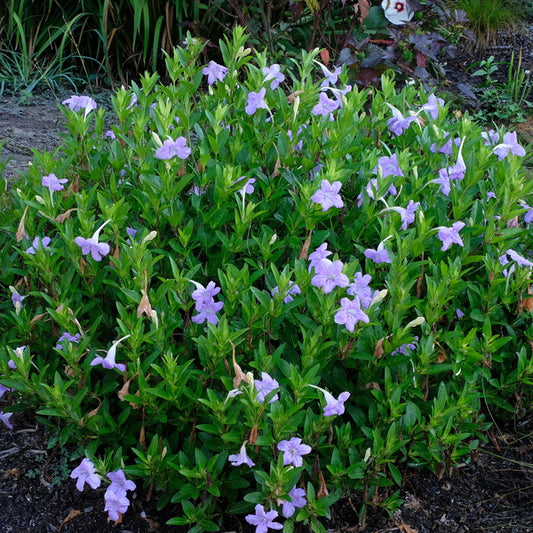
(syn: Plectranthus longitubus) I'll bet you never thought of growing rabdosia before...right? From the Japanese mountains of Honshu, Shikoku, and Kyushu comes this woodland member of the salvia family. The stems of the clumping Rabdosia longituba rise throughout the summer, reaching 2' tall by September, when they are topped with 1' long, airy panicles containing hundreds of pendent, purple tubes. Rabdosia longituba is as hard to describe as it is to pronounce, but finding anything that flowers in the fall woodland is difficult...simply superb! Pot Size: 3.5" (24 fl. oz/709.77 ml)
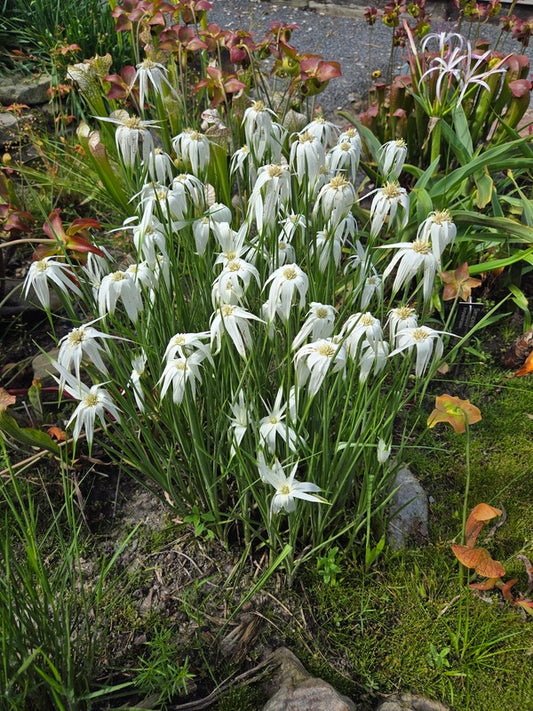
This unusual color form of trumpet spurflower was discovered in Japan, then imported and named by plant guru, Barry Yinger. Rabdosia 'Tube Socks' makes an upright, 3' tall x 2' wide clump of thin green stems adorned with green leaves. Just when you are wondering why you purchased it, the clumps explode with terminal clusters of small white flowers in mid-October. If you would like to brighten the woodland garden with a flowering fall perennial, I can't think of anything better than scattering "tube socks" throughout. Pot Size: 3.5" (24 fl. oz/709.77 ml)
Ranunculus ficaria 'Brambling' is a superb selection that emerges in late winter with lovely silver and black patterned foliage that forms a 3" tall x 8" wide clump, topped in early spring with bright yellow flowers. By late May, the clumps go to sleep for the summer. Pot Size: 7.87 fl. oz (232.7 ml)
For Winter Open House visitors to the garden, this is certainly the most talked-about plant we grow. This deer-resistant spring ephemeral emerges in February with rounded, glossy black foliage in a 6" wide rosette that hugs the ground. From late February through late March (in NC), the clumps are topped with brilliant yellow, 1" flowers held on 3" stalks just above the foliage. The stark contrast between the foliage and flowers is well expressed in the name given by its introducer, the late Christopher Lloyd. Ranunculus 'Brazen Hussy' goes dormant by May, so be sure to mark your clumps for next spring. Unlike the species Ranunculus ficaria, the cultivars are not weedy, although I'd still not plant them near important natural areas. Pot Size: 7.87 fl. oz (232.7 ml)
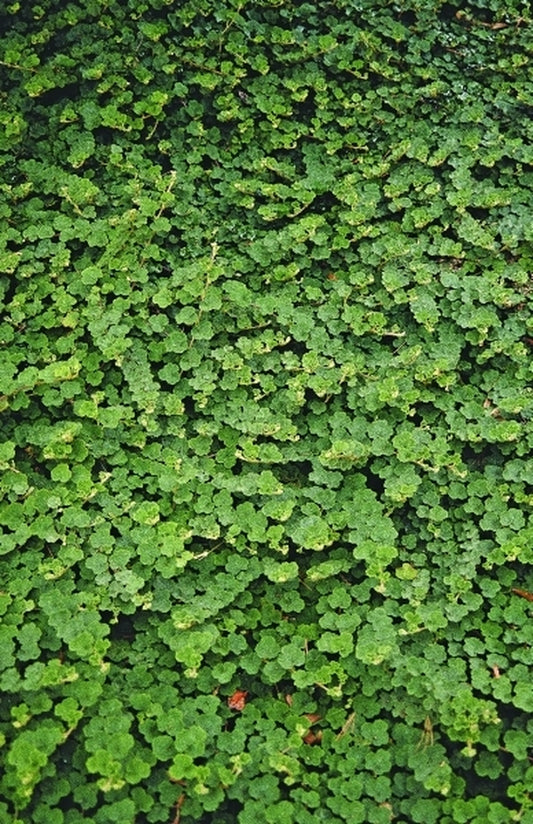
Ranunculus ficaria 'Randall's White' is one of the many wonderful rock garden cultivars of an otherwise noxious weed. This selection comes from Allan Robinson, former Rock Garden Superintendent at Wisley, who named it after his cat. For us, Ranunculus 'Randall's White' emerges in mid-February and flowers in mid-March. The 3" tall x 6" wide deer-resistant clump is composed of quarter-sized, heart-shaped, glossy green leaves and highlighted by a dramatic silver pattern. The 1" creamy daisies emerge on 3" stalks and age to white with a bright yellow center. By late May, the plants are asleep for the summer. Pot Size: 7.87 fl. oz (232.7 ml)
This selection of the winter-flowering Ranunculus ficaria makes a tight clump of quarter-sized green leaves, mottled with an irregular silver pattern. The clumps are topped from late February through late March with 2" tall stalks of double yellow flowers. Each 8" wide deer-resistant clump emerges in late January and goes dormant by late May. Pot Size: 7.87 fl. oz (232.7 ml)
(syn: Rehmannia angulata) Visitors have fallen in love with this easy-to-grow groundcover member of the scrophularia family. In loose, moist soils, Rehmannia elata will spread to make a nice mat of closely-spaced rosettes. From late spring through midsummer, Rehmannia elata is topped with 2' tall stalks dripping with massive, pinkish-purple, penstemon-like flowers...each with yellow specks deep in the throat. Flowering is heaviest in late spring, then sporadic in the summer...OUTSTANDING! Rehmannia is named in honor of the Russian physician, Joseph Rehmann (1799-1831). Pot Size: 3.5" (24 fl. oz/709.77 ml)
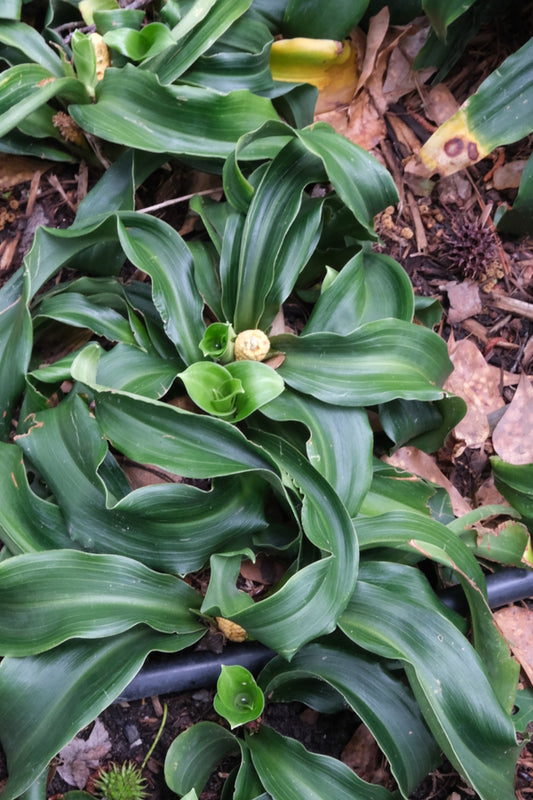
Shoulda, coulda, woulda been an elephant ear. Remusatia is one of those splinter groups of fundamentalist elephant ears that broke off from the genus colocasia over differences in reproductive philosophy. Remusatia pumila 'Mini Mask' is a PDN selection with a particularly dark face on the 8" long x 5" wide leaves. Each leaf is highlighted by muted silver veins and a dark purple blush to the leaf back. Remusatia pumila is a slowly stoloniferous species that makes a 4' wide non-invasive mound in 5 years. The plant is made up of 14" tall leaf stalks that emerge in mid-June. In early spring, the spiky, fragrant, yellow flowers are produced inside the leaf canopy. In the wild, Remusatia pumila grows in humus-like soil and occasionally as an epiphyte. Pot Size: 3.5" (24 fl. oz/709.77 ml)
We are pleased to offer our collection of the hitchhiker elephant ear, Remusatia vivipara, from near the North Vietnam town of Son La where we found it growing in rocky, shaded slopes with Amorphophallus yunnanensis and Disporopsis longifolia. The large, often solitary elephant ear-like, olive green leaf is backed with large purple blotches...most prominent on the new leaves. Late in the season, mature plants produce bizarre Viagra-induced, rigidly upright stolons clothed with small tubercles. The sticky hitchhiking tubercles will produce new clones of the original plant. Mature plants produce an attractive bright yellow flower in late spring before the leaves emerge. The foliage, however, will not emerge before mid-June, so chill out! A dry spot in the winter months is the key to survival in the ground. In containers, allow the plant to go dormant and keep it above freezing. Pot Size: 3.5" (24 fl. oz/709.77 ml)
The hardiest of palms, Rhapidophyllum hystrix is a slow-growing Southeast US (Florida, Georgia, Alabama, and South Carolina) native that has withstood -9 degrees F here with NO damage (without protection or special siting). We expect established specimens should handle -20 degrees F. This short-trunked, clump-forming, hardy palm has typical cut-leaf, green palm foliage and sharp "needles" at the base to protect the seeds...very rare! In marginal climates, it's best to plant needle palms early in the season and protect them the first couple of winters until they become well-established. In colder climates, we recommend up-potting young plants and keeping them indoors until they are larger. Pot Size: 3.5" (24 fl. oz/709.77 ml)
This commonly seen US native, from Canada south to Florida, is surprisingly absent from American gardens. In appearance, it is a dwarf hardy version of its cousin, tibouchina. The 1' tall upright stems are topped with clusters of outfacing violet flowers from early August until frost. While Rhexia virginica is most at home in moist, acidic soils, we have found it to be extremely adaptable to much higher pH soils as well as typical non-bog garden sites. A well-grown Rhexia virginica makes a large patch to 3' wide in 3 years that integrates nicely with neighboring plants. If your garden needs a color boost in late summer and fall, rhexia is for you. Pot Size: 3.5" (24 fl. oz/709.77 ml)
This offering represents flowering-sized plants grown from PDN seed, from an original 2001 Buenos Aires area collection by Alberto Castillo. We have found these to be very similar to Rhodophiala bifida var. spathacea, but with origin data. Starting in late August and continuing through September, the leafless flower stalks of this drought-tolerant hippeastrum relative rise to 15" and are topped with a cluster of carmine-pink outfacing flowers. After the flowers fade, 18" long glossy green leaves emerge and remain through the winter months. Rhodophiala bifida is very easy to grow and looks superb both as a specimen or when used in a mass planting. Pot Size: 3.5" (24 fl. oz/709.77 ml)
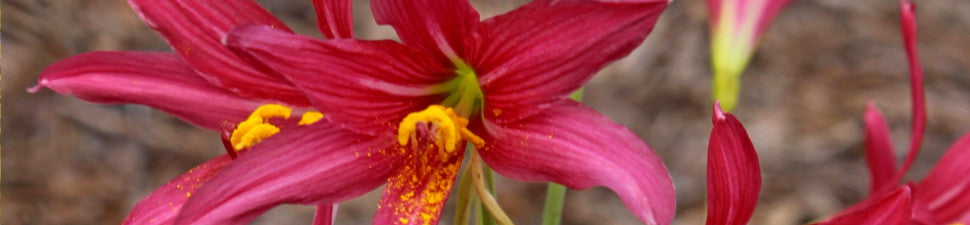
(aka: Hippeastrum advenum) Rhodophiala bifida is a delightful, easy-to-grow Argentine amaryllis relative and one of the most outstanding and durable bulbs for southeastern gardens. Multiplying steadily, Rhodophiala bifida remains evergreen through the winter, finally going dormant in late spring. Beginning in late summer or early fall, the 15" stalks arise from nowhere, each topped with a cluster of stunning, carmine-red, horizontally facing, habranthus-like flowers...a superb garden surprise toward the end of the season! In 2011, a group of major bulb experts and growers voted to name the old Texas heirloom clone Rhodophiala bifida 'Hill Country Red'. Pot Size: 3.5" (24 fl. oz/709.77 ml)
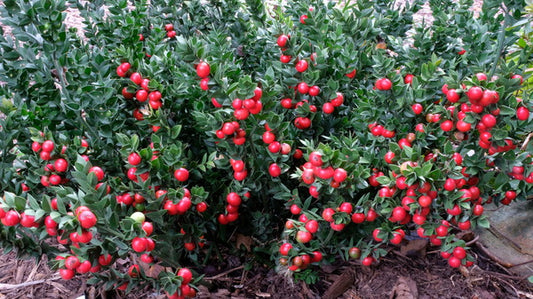
This cute, but truly odd, native groundcover member of the pokeberry family hails from Florida west to Arizona, where it can be found on moist, but well-drained soils in both light shade to part sun. In our trials, it has formed a 1' tall x 3' wide, salt-tolerant, deciduous groundcover of green leaves topped with short stalks of pink flowers that quickly change to tiny clusters of red fruit. Rivina is a favorite of numerous birds, butterflies, and mixed container designers. Rivina is also used in the Southwest as a red dye since it contains the pigment rivianin...a pigment similar to that in beets. If your soil gets too dry, pigeonberry will go dormant and re-emerge when rain arrives. Pot Size: 3.5" (24 fl. oz/709.77 ml)
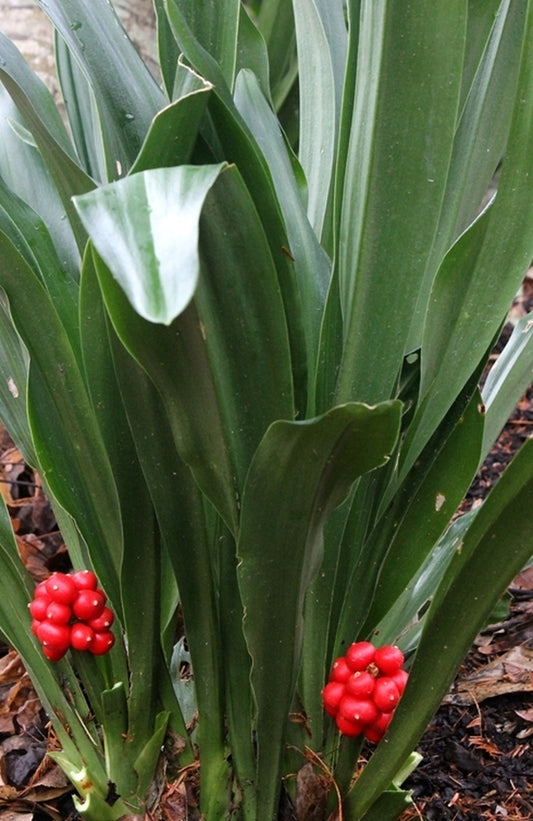
Rohdea japonica is a rare and highly-prized, tropical-looking, oriental native that mimics the appearance of an evergreen hosta. The 1' long x 2" wide, thick, dark green leaves form an upright vase-shaped clump to 2' wide in 10 years. Late in the season, the insignificant flowers produce attractive short stalks of red berries that persist through the winter at the base of the plant. When used en masse, rohdeas are a dynamite evergreen winter interest addition to the deep shade garden. We have masses of Rohdea japonica growing at the base of giant black walnut trees...can you say tough? Pot Size: 3.5" (24 fl. oz/709.77 ml)
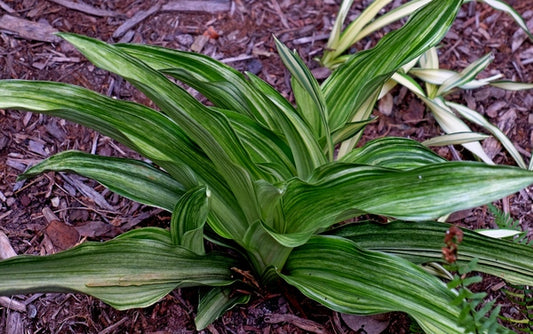
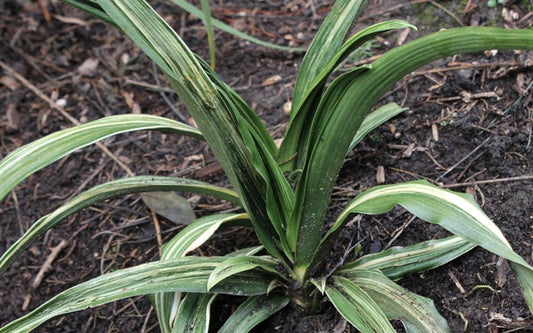
(syn: R. 'Asian Valley') This unusual rohdea whose name, Rohdea 'Chirimen Boshi' means "crepe paper hat" was first introduced from Japan in the late '70s (US National Arboretum #62147-D). The evergreen sacred lily clump reaches 12" tall with a 20" spread. Each leaf resembles a long, V-shaped valley. The rough and wavy plasticized green foliage is bordered by a narrow edge of creamy white. In fall, expect 3" tall stalks of red berries at the base...a very unique cultivar that will be prized by plant collectors. Pot Size: 3.5" (24 fl. oz/709.77 ml)
We are pleased to add another collector's edition rohdea to our extensive offerings. Rohdea 'Gyoku Ho Nishiki', which means "jeweled phoenix brocade" (according to Barry Yinger, who knows these things) makes a small clump to only 3" tall x 8" wide. The dark green leaves are heavily pleated and ridged...reminiscent of some mountains I drove through in China. The leaves are then carefully hand-painted with streaks of white by master rohdea designers. In the ground, Rohdea 'Gyoku Ho Nishiki' needs a special spot so it doesn't get swamped by larger, more aggressive garden bullies. Although all rohdeas are drought-tolerant, they perform best in slightly moist, rich soils. Pot Size: 3.5" (24 fl. oz/709.77 ml)
Rohdea japonica 'Kin cho Ju' is a nicely vigorous (as Rohdeas go) dwarf Japanese selection of sacred lily. Rohdea 'Kin cho Ju' makes an offsetting clump of upright 1' long, narrow leaves that develop an irregular white banded edge along with horizontal cloudy white banding on the new growth that eventually fades to green. Pot Size: 3.5" (24 fl. oz/709.77 ml)
This amazing and very rare selection of the Japanese sacred lily has the most contortedly (take note...a new plant word) kinky leaves of any selection we grow. The Japanese cultivar name 'Nobori Ryu' means "climbing dragon"...a reference to the dramatically raised ridge running down the center of each thick green leaf. In winter, the deep shade-loving sacred lilies are highlighted for the season with short stalks of brilliant red berries. Pot Size: 2 qt. (1.892 L)
Available 6-13-13This selection of evergreen sacred lily is one we brought back from a visit to the UK in the early '90s. The dark green leaves appear to have been heavily brushed in a horizontal direction with white paint. Actually, it looks like the last home paint job I got when I took the lowest bid. At least in rohdeas, bad paint jobs make the plant worth more. How many do you want? If you have a shady spot near your house, plant Rohdea japonica 'Talbot Manor' nearby and tell your spouse you painted the house to match...on purpose. Pot Size: 2 qt. (1.892 L)