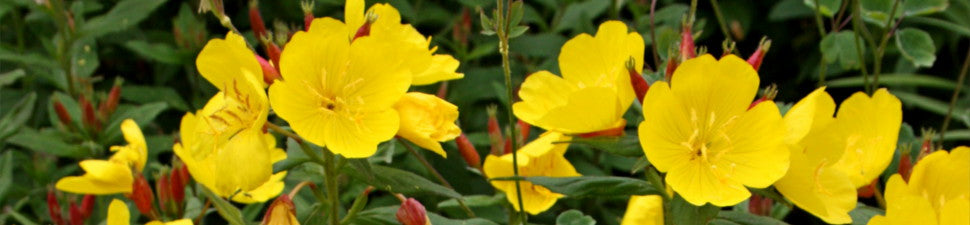
This amazing North American native, which hails from prairies and similar habitats from Canada south to northern Florida, is one of the most stunning plants in the late spring garden. The hairy, woody stalk emerges in spring from winter rosettes, clothed in lanceolate (narrow) green leaves and topped from mid-May thru mid-June with bright red buds that open to screaming yellow, 4-petaled flowers produced on the top half of the stem. Oenothera fruticosa spreads by underground rhizomes, but is nothing like the horribly weedy Oenothera berlandieri. Our 10-year-old clumps are 6' wide, but are easily removed from unwanted areas. Pot Size: 3.5" (24 fl. oz/709.77 ml)
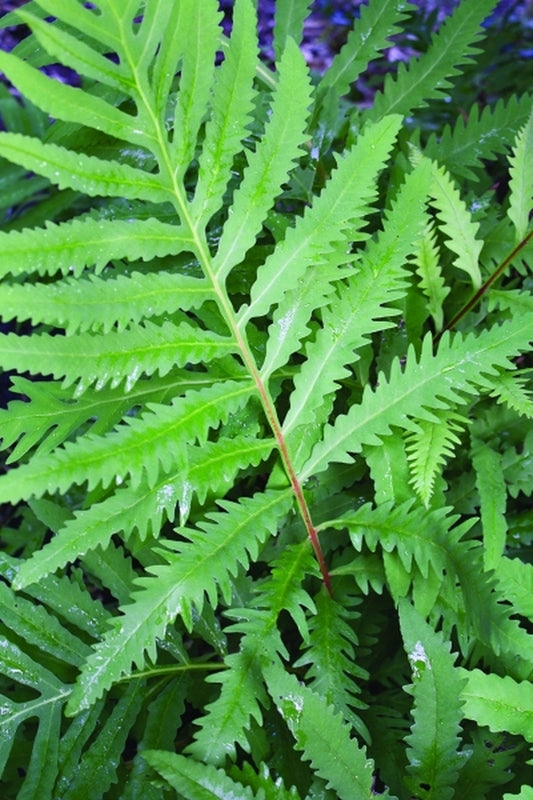
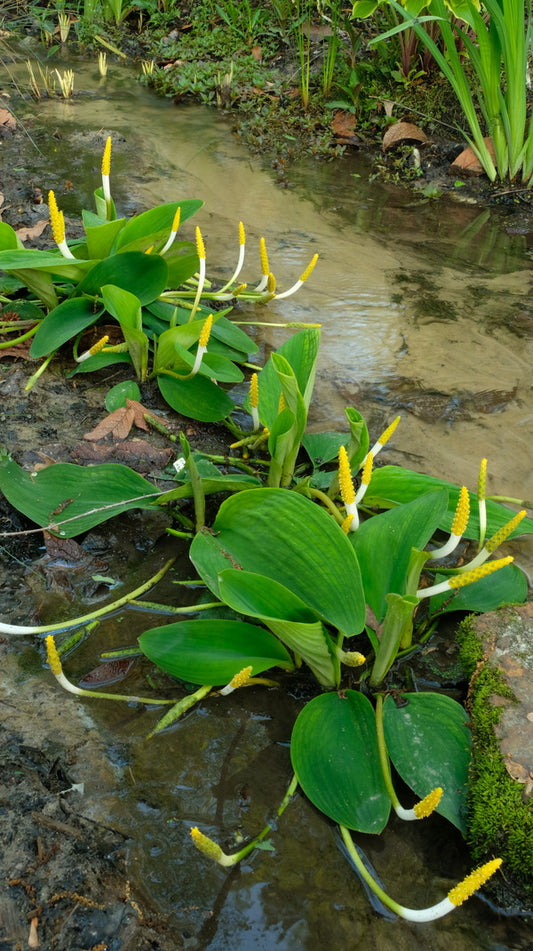
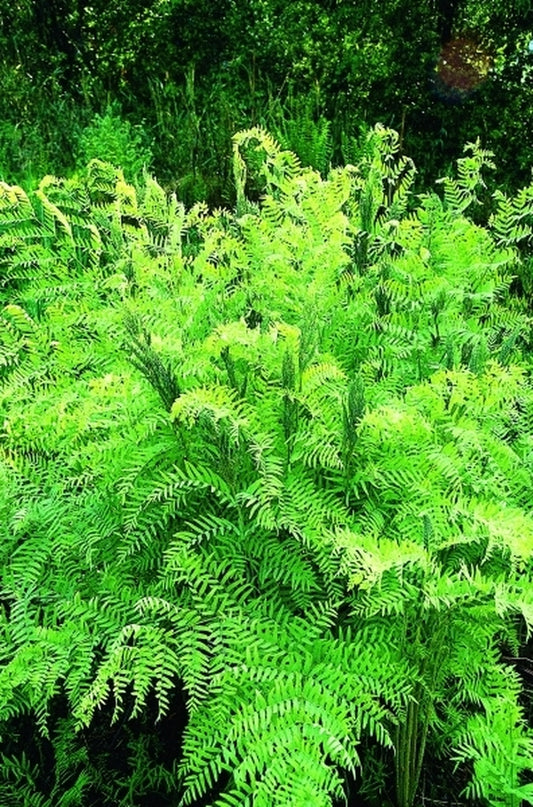
In 2007, I was tromping through a bog in Horry County, SC and spotted a patch of the deciduous sensitive fern that seemed much larger than the typical size plants that grew nearby. Upon planting a rhizome in our home garden, it didn't let me down, producing leaves much larger than normal. The giant 3' tall fronds (2' tall is normal) are comparable in size to our other giant Onoclea, 'Texas Too Tall', although we haven't grown the two side by side. When the fronds of Onoclea sensibilis 'Supersize' emerge in spring, they also have a nice red central stipe, whose color later fades in the heat. Moist rich soils will produce the largest size plants. Remember that these spread by rhizomes, so don't plant them near other less aggressive plants. Pot Size: 3.5" (24 fl. oz/709.77 ml)
(syn: Onychium japonicum HH03CH111) This Hans Hansen spore collection from Ping Wu, China, has been much more vigorous than a typical Onychium japonicum. The deciduous fronds arise in spring from a slowly creeping rhizome that makes a 3' wide clump in 3 years. Each frond resembles an extraordinarily lacy rabbit's foot fern...the most exquisite green lace that you can imagine. In the wild it grows on rocky cliffs to 14,000', but for us has been very happy in our woodland garden in open shade, although trial plants in deep shade grew poorly. We have had reports of this thriving in Zone 6b, so it's worth trying in colder regions. Pot Size: 3.5" (24 fl. oz/709.77 ml)
(aka: Onychium j. A1C-375) Onychium japonicum 'Yunnan Fancy' is our 1996 collection from the Cang Shan Mountain Range in Yunnan, China at 9,000' elevation. Onychium 'Yunnan Fancy' is the tallest of the onychium forms we grow, making a 2' tall x 3' wide patch (5 years) of 2' long, lacy, green, deciduous foliage, growing from a rabbits foot fern-like fuzzy brown rhizome that resides just under the soil. Onychiums prefer good drainage and really need a moderate slope to grow their best. We've also found that an hour or two of full sun produces the most vigorous plants. Pot Size: 3.5" (24 fl. oz/709.77 ml)
Ophiopogon jaburan 'Vittatus' is a rare giant clumping (does not run) mondo grass with irregularly striped green and white leaves...resembling a super-sized clump of liriope. Our 15-year-old clumps are 30" tall x 6' wide. In August, the giant mondo grass clumps are adorned with arching 30" long flower spikes, laden with white flowers. After the flowers fade, they are replaced from October through the Christmas holidays with attractive, cobalt blue, jelly bean-like fruit. Ophiopogon jaburan 'Vittatus' is an amazing giant specimen plant in the woodland garden, although the authorities will probably be wanting to test your garden for steroids. Pot Size: 3.5" (24 fl. oz/709.77 ml)
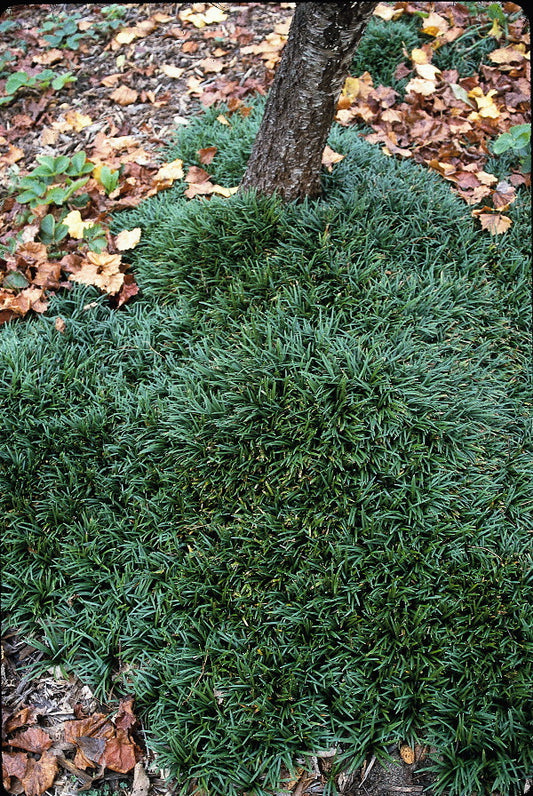
"Simply irresistible" is the best way to describe this dwarf version of mondo grass with dark green, grass-like foliage, which eventually makes a tight mat in even the worst of conditions. Plant dwarf mondo on 6-12" centers for a wonderful evergreen groundcover. Ophiopogon 'Gyoku Ryu' could best be described as looking like a rich, dark green lawn of pre-mowed grass...what a great idea! Pot Size: 3.5" (24 fl. oz/709.77 ml)
(aka: Ophiopogon j. A1K-130) I spotted this unusual mondo grass when making the exhaustive hike over the top of Korea's Ulleung Island in 1997. Unlike most mondos, this plant formed a very narrow leaf clump, to 12" tall x 20" wide, without any sign of a runner. The light lavender flowers of spring give rise to bright blue berries in fall. Although Ophiopogon japonicus is the only species that this could be, it is unlike any Ophiopogon japonicus that I've ever seen. This has great garden potential for the woodland garden where a running mondo is not acceptable. Pot Size: 3.5" (24 fl. oz/709.77 ml)
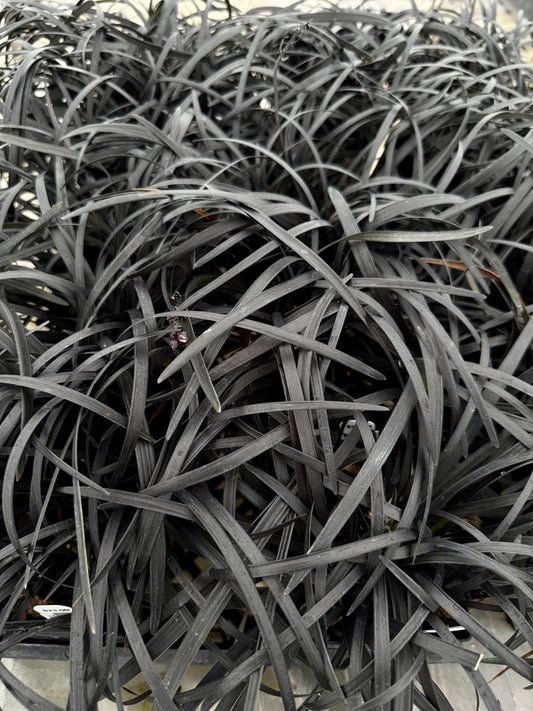
(aka: Ophiopogon 'Nigrescens', 'Ebony Knight') Black mondo grass has long been one of the stars in our NAACP (National Association for the Advancement of Colored Plants) garden...actually, I think this black garden thing is catching on. Originally introduced in the US in 1960 by California's Oakhurst Gardens, each 6" tall circular mound is composed of truly black 0.25" wide foliage. Spreading slowly by rhizomes, a single plant of Ophiopogon 'Arabicus' will make a nice 18" wide mat in 3 years. For quicker coverage, we plant on 10-12" centers. This easy-to-grow groundcover makes a fabulous backdrop for blues, golds and good imaginations...do you have a dream? Pot Size: 3.5" (24 fl. oz/709.77 ml)
I'll admit to getting a bit too excited over new liriopes and ophiopogons, but I hope you'll agree with me that this one merits our enthusiasm. From the UK's Steve Yandell comes a new selection of Ophiopogon planiscapus that forms a large 1' tall clump, remaining tighter and growing faster than the spreading Ophiopogon 'Arabicus'. We have not grown this long enough to confirm all of Steve's claims, but he's never led us astray before...come to think of it, we've never met him before either. Unfortunately, it was patented under the nonsensical name of Ophiopogon 'Yapard'. Pot Size: 3.5" (24 fl. oz/709.77 ml)
The unusual, fine-textured southern Chinese mondo grass, Ophiopogon umbraticola makes small curly tufts of very narrow green blades that resemble your hair when waking up after a long night of consuming adult beverages. The dark green clumps are adorned with 10" long stalks of tiny white flowers in late June...an easy-to-grow textural addition to the woodland garden. This plant entered the country as Ophiopogon chingii and has been passed around under that name until several of us found that it was incorrectly identified. Pot Size: 3.5" (24 fl. oz/709.77 ml)
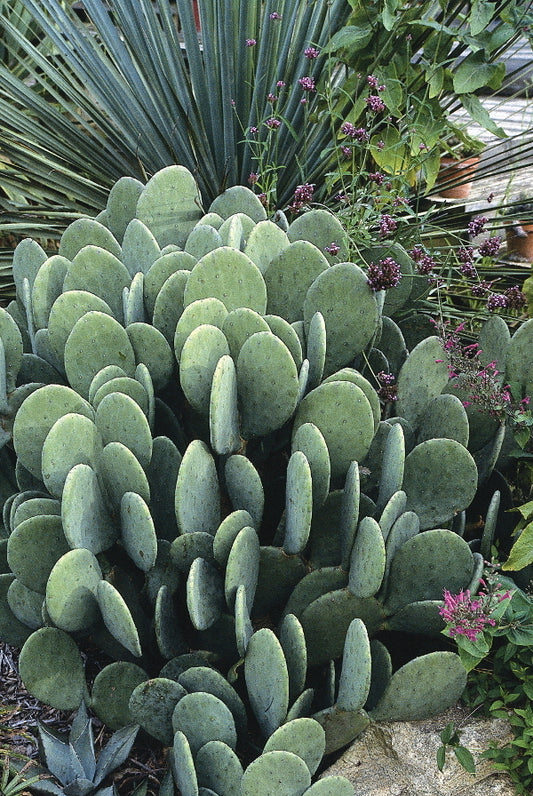
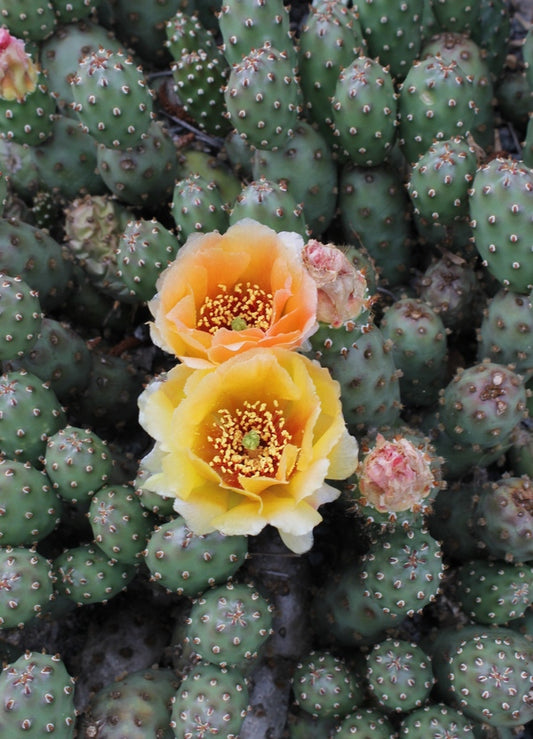
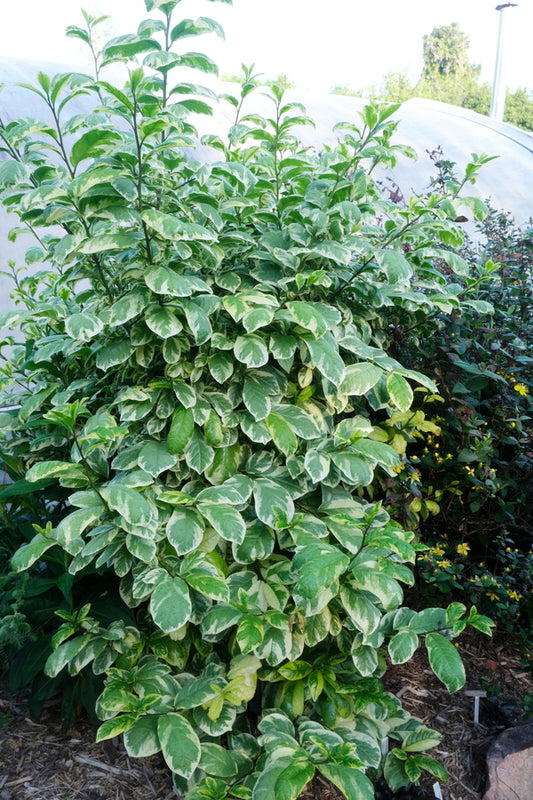
(aka: Opuntia 'Burbank Spineless') Thanks to Scott Ogden and David Ferguson for pointing out a major error...the plant we offered as 'Burbank Spineless' is the wrong plant. Burbank's plant is a form of the less hardy Opuntia ficus-indica. Our plant is a spineless selection of the US/Mexican native Opuntia cacanapa named 'Ellisiana'. For us, this fast-growing but compact opuntia makes a 3' tall x 6' wide deer-resistant mound (in 5 years) of 6" grey-green spineless pads. In August, the clump is topped with large, bright yellow flowers...a hummingbird oasis, followed by large red "pears." Well-drained winter soils are vital for best performance. Pot Size: 3.5" (24 fl. oz/709.77 ml)
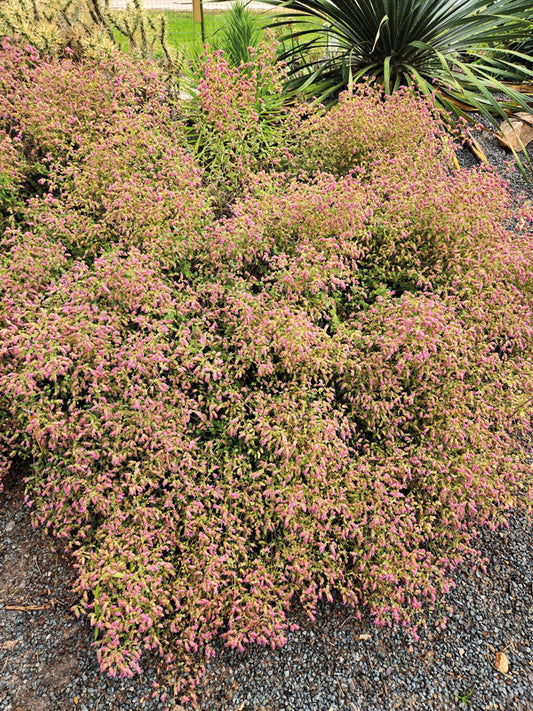
(aka: Origanum 'Lizzie's Hybrid #2) Origanum 'Lizzie' originated as a garden seedling at California's Calflora Nursery where it was discovered by their propagator, Liz Fial. Origanum 'Lizzie' was one of six original selections...this one appears to be a hybrid of Origanum laevigatum and the culinary Origanum vulgare. Whatever the parentage, Origanum 'Lizzie' is an amazingly vigorous plant with culinary quality fragrant foliage. Our 15" tall x 6' wide patch (2 years) starts flowering in mid-June (NC) with lovely terminal sprays of mauvy lavender. As each floral show ends and before the next one begins, the old flower heads look like a convention of Rastafarians. When flowering, Origanum 'Lizzie' is a virtual love fest for all kinds of cool insects, so pull up a chair and become a voyeur! Pot Size: 3.5" (24 fl. oz/709.77 ml)
This Jamie Blake oregano selection makes a 3'+ wide clump (7 years) of tiny, glaucous-green leaves. In late June (NC), the 2' tall clumps are topped with sprays of rich lavender-purple (RHS 80A) flowers held in a dark purple calyx (RHS 59A)...much darker than Origanum laevigatum 'Hopley's Purple'. Oreganos are great for attracting an array of cool insects to the garden. Remember that this is for ornamental value only...you can cook near it, but not with it. Pot Size: 3.5" (24 fl. oz/709.77 ml)
This lovely yellow-leaf form of the culinary Origanum vulgare was named after oregano expert, Dr. J.H. Ietswaart. Origanum vulgare 'Dr. Ietswaart' makes a 6" tall x 3' wide patch (5 years) of round, golden yellow leaves with a delicious mild fragrance. In midsummer, the clumps are topped with 1' tall spikes of very pale lavender flowers...outstanding in both the garden and the kitchen. Pot Size: 3.5" (24 fl. oz/709.77 ml)
Origanum vulgare ssp. hirtum 'Hot and Spicy' is an oregano selection for gardeners who love to cook. The small, round, dark grey-green, hairy, evergreen foliage adorns the 2' tall x 3' wide patch. In July and August, the clumps are topped with 2' tall spikes of light lavender flowers. Origanum 'Hot and Spicy' is particularly good for ethnic dishes that call for a particularly strong oregano. Keep in mind that the foliage has the strongest flavor prior to flowering. Pot Size: 3.5" (24 fl. oz/709.77 ml)
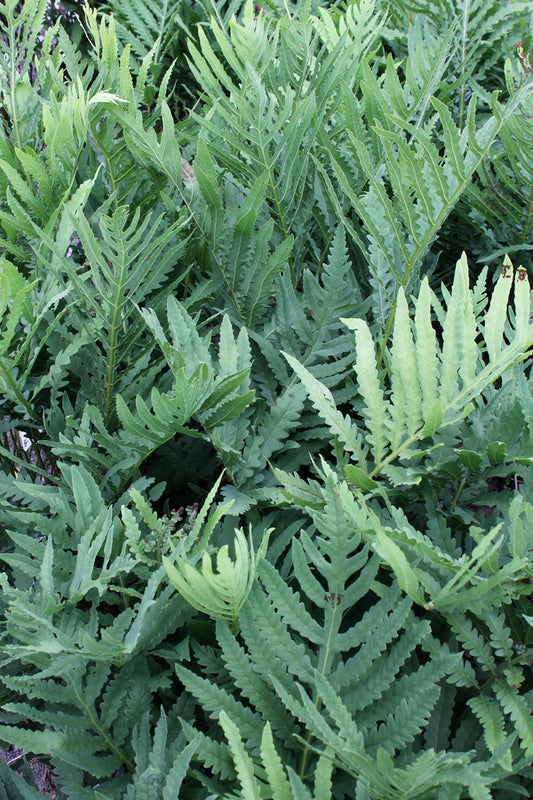
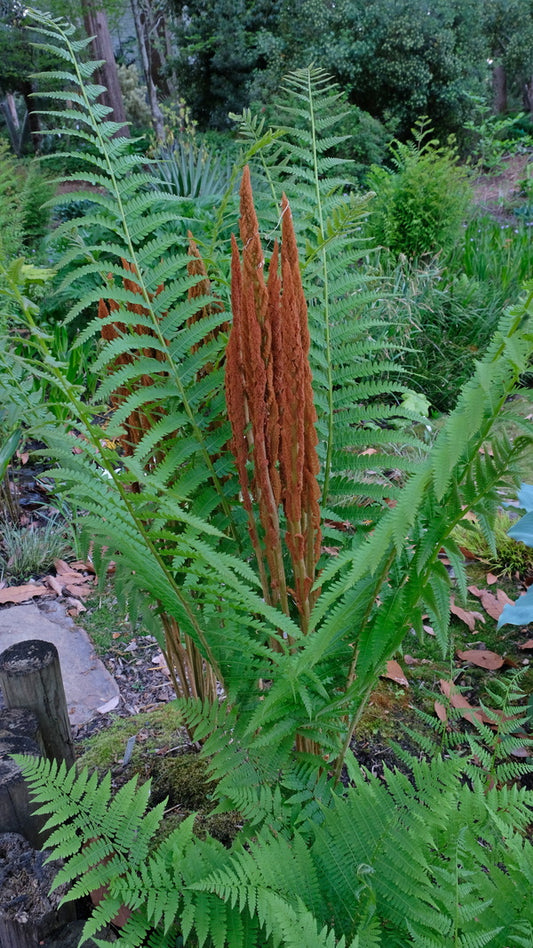
(Osmundastrum cinnamomea) The deciduous US native Osmunda cinnamomea fern can be found in every state east of the Mississippi River...and Texas and Oklahoma. The stately, upright, 3' tall clumps of osmunda thrive in moist soils but also grow well under typical garden conditions...a great large foil in woodland settings. The fertile fronds of Osmunda cinnamomea arise in spring just above the sterile foliage as phallic, cinnamon-colored spikes in the center of the clump. In moist soils, a happy clump of cinnamon fern can reach 3' tall x 3' wide, although very old clumps in ideal conditions have been know to reach 6'...one of our finest US native plants. Recently DNA work shows that Osmunda cinnamomea is only distantly related to other osmunda ferns like Osmunda regalis and some taxonomist have moved it to another genus, Osmundastrum. Pot Size: 3.5" (24 fl. oz/709.77 ml)
This evergreen native to the African countries of Algeria and Tunisia is still little-known in the US, despite being used extensively by the late UK garden designer Gertrude Jekyll in the early 1900s. I dare say this is the only native to North Africa we grow, but it is one that has performed amazingly well through both our hot, humid summers and cold, wet winters. The tight mats, whose foliage resembles tiny upright silver-blue coke spoons, are topped by 8" tall flower stalks of yellow daisies in late spring. Othonna cheirifolia is right at home sited in a hot sun, well-drained rock garden or in a drought-prone seasonal container planting in colder climates. Pot Size: 3.5" (24 fl. oz/709.77 ml)
This South African wood sorrel makes a fabulous garden plant for us. Hailing from South Africa's Eastern Cape province, Oxalis bowiei emerges from dormancy in fall and almost immediately starts to flower (late October in NC) with 10" tall stalks of rich cherry-pink flowers. The large, glossy-green, shamrock-like leaves serve as a nice foil for the flowers. Flowering continues for a couple of months...longer if winter weather cooperates. The foliage finally goes dormant in late spring and rests until fall arrives. Oxalis bowiei is a clumping species that doesn't spread underground or seed in our climate. Pot Size: 3.5" (24 fl. oz/709.77 ml)
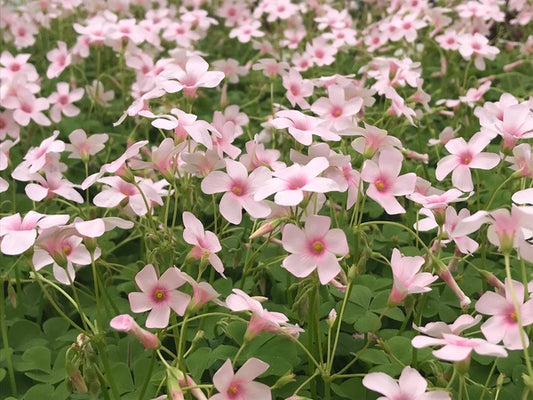
Oxalis crassipes 'Rosea' is an amazing bulbous perennial that produces a 10" tall x 1' wide perennial clump of trifoliate green leaves, topped with hundreds of small pink flowers. In cool climates, the flowering starts in early May (NC) and continues until frost, but in hot summer climates, the plant goes dormant once the weather warms and remains dormant until the weather cools in fall and the flowering resumes. Pot Size: 3.5" (24 fl. oz/709.77 ml)
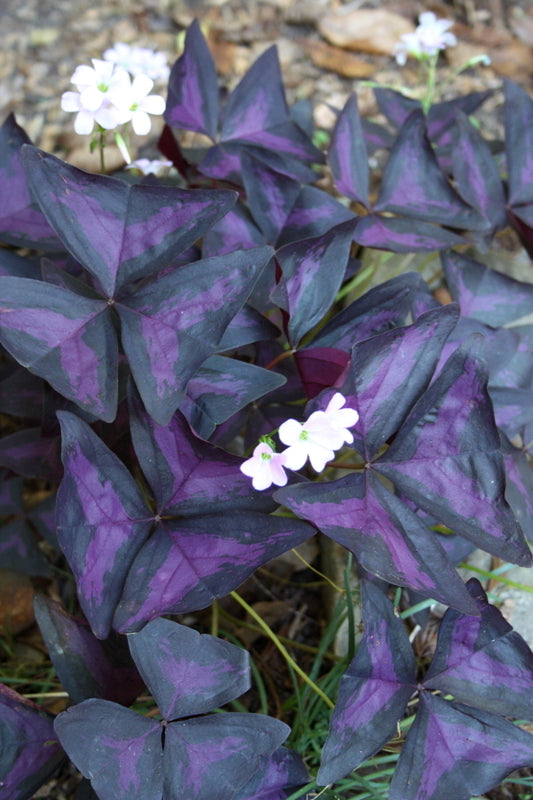
If Oxalis palmifrons isn't the cutest plant that you've ever grown, then you need to re-examine your definition of cute. Oxalis palmifrons hails from the deserts of South Africa's Western Karroo. This insanely cool oxalis looks for all the world like a giant green snowflake. The slowly spreading patch of ground-hugging rosettes spreads to 2' wide in 10 years. Each symmetrical rosette is composed of glaucous-green, three dimensional, miniature palm-like leaves. Oxalis palmifrons is a winter grower which doesn't emerge until late fall when it is topped with stalks of light pink flowers held just above the foliage. It remains evergreen all winter, finally going dormant when the heat of summer arrives. In colder climates, Oxalis palmifrons makes a great windowsill container plant. Pot Size: 3.5" (24 fl. oz/709.77 ml)