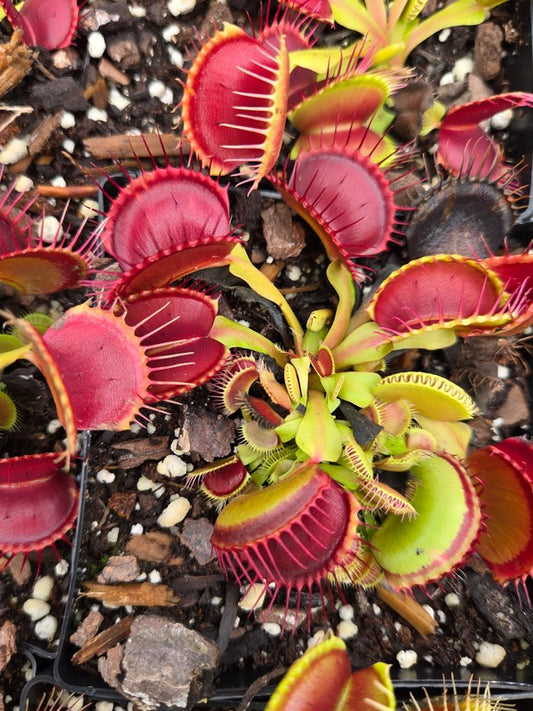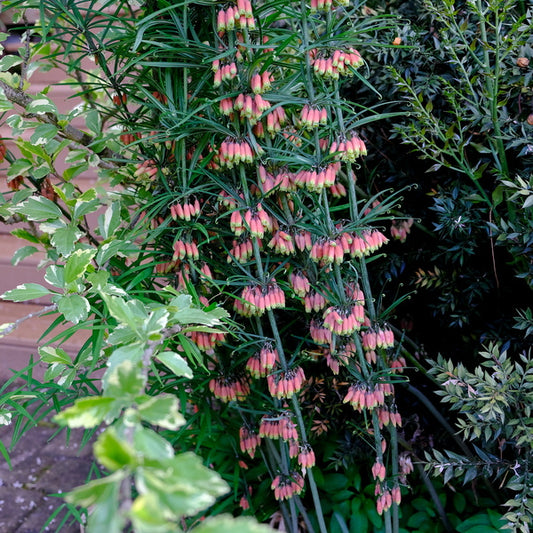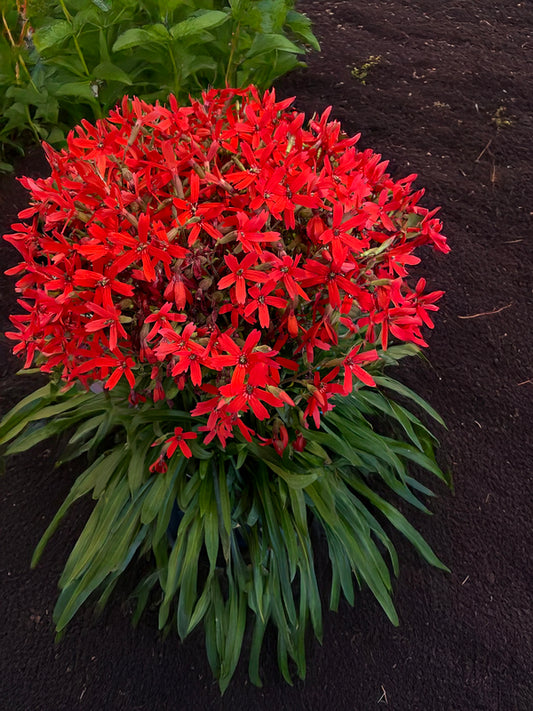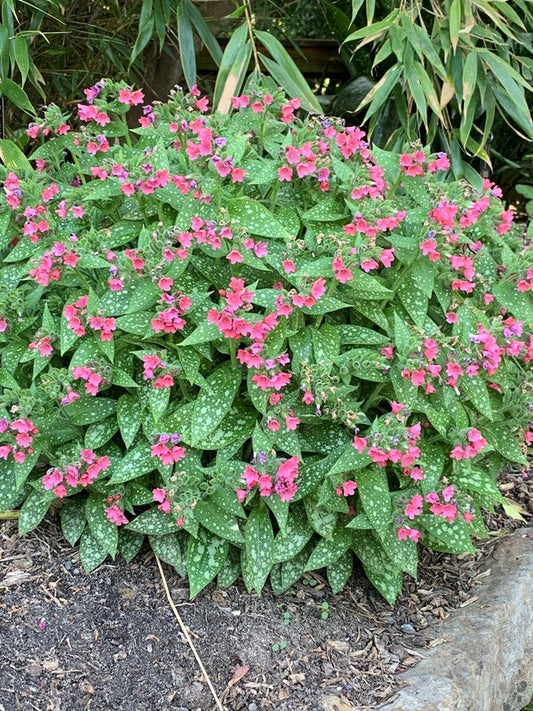
We've just completed our fall inventory and as often seems to happen, some of the coolest plants didn’t sell in the numbers that we’d hoped so we’re left with extra inventory…the nature of offering so many non-mainstream plants. Consequently, and because we need space to propagate and pot new plants for spring, we’re offering those 200 plants at 20% off. The sale plants must be ordered by midnight November 4, 2012 and scheduled to ship or be picked up no later than November 9, 2012. Quantities are limited on some items, so sale prices are only valid while current stock lasts. Because our cost of doing business is less on the website, this sale is only available for orders placed on the website.
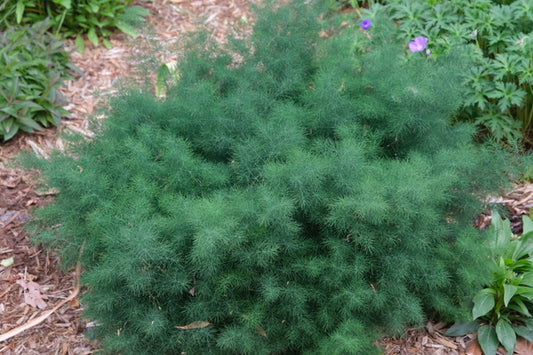
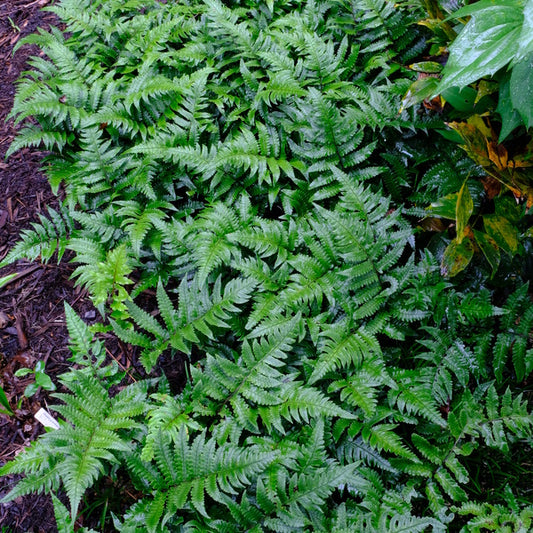
(aka: Adiantum capillus-veneris A3T-022) We discovered this wonderfully cut leaf form of the southeastern native Adiantum capillus-veneris along Wasp Creek in Kendall County, Texas. Unlike most forms of southern maidenhair fern, the pinnae are shaped like narrow Japanese hand fans. For us, Adiantum 'Fan Dance' forms a tight 6" tall patch that expands to 2' wide in 5 years. We are pleased to finally be able to share this special form of southern maidenhair fern. Moist soils are best. Pot Size: 3.5" (24 fl. oz/709.77 ml)
(aka: Adiantum c-v A1CR-090) In 2010, we discovered a small patch of Adiantum capillus-veneris growing in a wet seep at 1680' elevation on the south slope of Crete's Mt. Ida...very near an amazing population of white-flowered Dracunculus vulgaris. Our spore collections germinated well enough that we are able to share. The parent clump was more compact than most of the US native forms, maturing around 6" tall. We expect a 2' wide patch in 5 years...we'll find out together. Pot Size: 3.5" (24 fl. oz/709.77 ml)
Agapanthus 'Bressingham Blue' is a 1972 introduction selected by the late plantsman Alan Bloom of the UK's Bressingham Gardens. Agapanthus 'Bressingham Blue' is a seedling selection from thousands of plants of the famous Headbourne hybrids. The clump of narrow, green, winter-deciduous leaves is topped, starting in late June (NC), with 30" stalks ending in 4.5" round flower heads of dark blue-violet flowers. Agapanthus 'Bressingham Blue' has been a vigorous, outstanding cultivar in our trials. Pot Size: 3.5" (24 fl. oz/709.77 ml)
(Patent 7297 expired) Agapanthus 'Ellamae'...now there's a plant with a good southern name! From California's Archie Amate comes this 1990 introduction, a monstrous and vigorous lily-of-the-Nile that makes a large clump of green strap-like leaves, topped in midsummer with dark blue-violet umbels of flowers on Jack and the Beanstalk-like 66" tall stems...butterflies not included. Pot Size: 3.5" (24 fl. oz/709.77 ml)
It was lust at first sight when I saw Agave bracteosa 'Monterrey Frost' in California's San Diego Botanic Garden. This rare form of the northern Mexican Agave bracteosa has been passed along in California collectors' circles for more than a decade, but is rarely available to the general public. The frozen squid-like architectural rosette of sandpapery green foliage is edged with a perfect creamy-white margin, eventually producing a 1' tall x 18" wide variegated specimen that will offset sporadically after it matures. Agave bracteosa actually enjoys part shade, which also keeps the white edge from scorching. The white edge reduces its winter-hardiness, so where this isn't reliably hardy, Agave 'Monterrey Frost' makes a stunning unarmed container specimen. With great age, your Agave 'Monterrey Frost' will flower with lovely fragrant yellow blooms that attract hummingbirds. Pot Size: 3.5" (24 fl. oz/709.77 ml)
(syn: Agave lophantha 'Marginata') We originally acquired this rare selection from Thailand as an Agave lophantha, which it is obviously not...we're betting on Agave funkiana. The 18" long x 1" wide, upright, shallowly grooved leaves are dark green and edged with a dramatic wide white border. The few scattered teeth along the leaf edges turn papery and fall away as the leaves age. Agave 'Hakuro Shiro Fukurin' (translated as "frosty white margin") makes a stunning 18" tall x 3' wide clump. These are slow growers in containers. Agave flowers attract hummingbirds. Pot Size: 3.5" (24 fl. oz/709.77 ml)
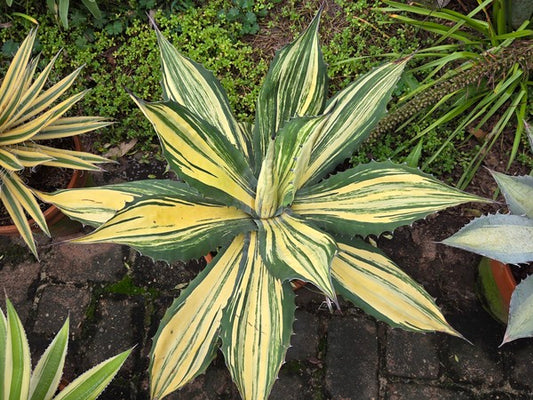
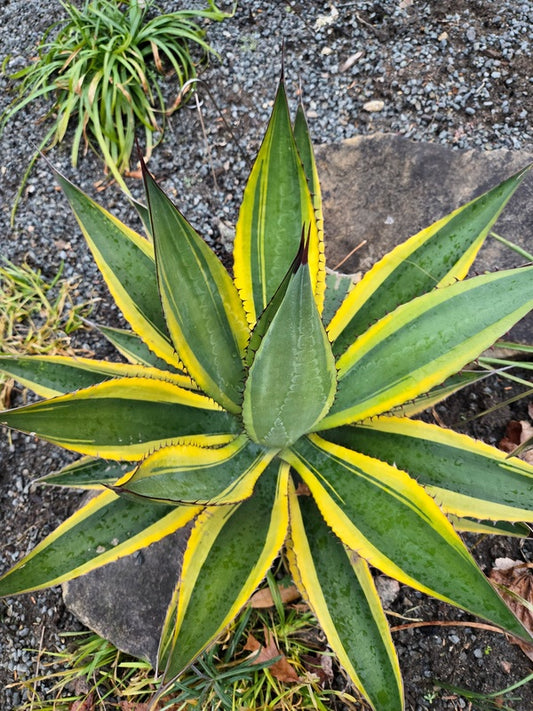
(syn: Agave guiengola 'Marginata') We are pleased to make available this elegant collector plant, whose parent originated in the Guiengola limestone cliffs of Oaxaca (pronounced "Wahaka"), Mexico. Since the name 'Marginata' has been invalid on plants named after 1959, we chose a new name, Agave 'Creme Brulee'. This soft-leaf agave is simply elegant with wide, medium green leaves surrounded by a 1" border of creamy white. While Agave guiengola can reach 3' tall x 4' wide, the variegation should slow it down considerably...we're guessing about 25 percent. Agave 'Creme Brulee' was discovered by California agave specialist, Kelly Griffin. Agave flowers attract hummingbirds. Pot Size: 3.5" (24 fl. oz/709.77 ml)
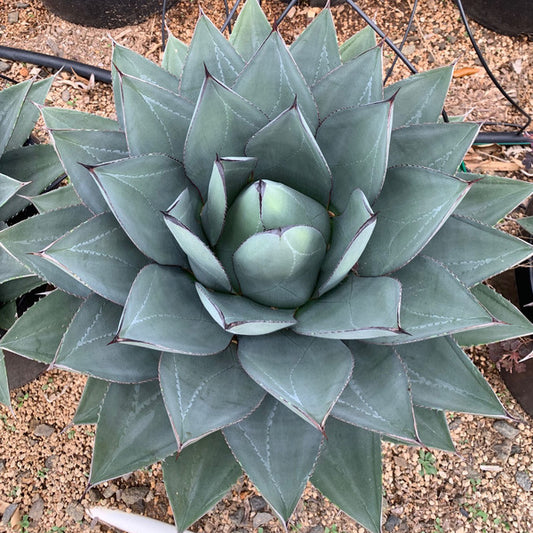
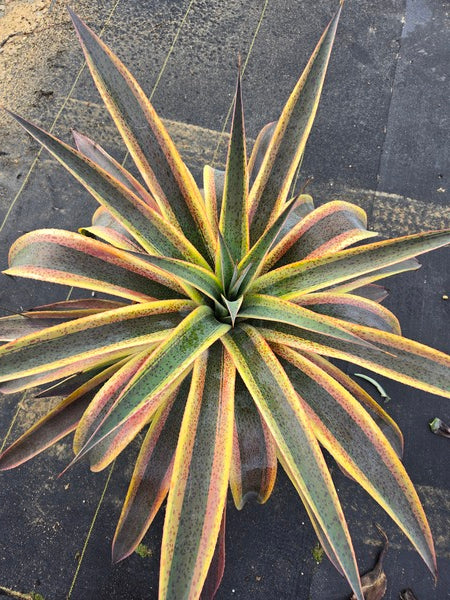
Agave 'Mateo' is a unique new century plant that was discovered as a seedling in a block of Agave bracteosa at San Marcos Growers of California. We are uncertain about the other parent, but speculate that an amorous Agave lophantha may be the baby daddy. The non-spiny, 18" tall x 3' wide, squid-shaped rosette of rough green leaves is highlighted by a central muted chartreuse-yellow stripe down the middle of each leaf. Agave 'Mateo' has so far survived two winters in the ground, but only to a low of 15 degrees F on multiple occasions so far. Pot Size: 3.5" (24 fl. oz/709.77 ml)
We are very excited about this beautiful agave from the Sonoran desert in northeastern Mexico (1,500'-4,500' elevation), where it can be found growing on volcanic limestone. The dense, dark-green leaves are edged in brown and tipped with a dark brown spine. Agave ocahui forms a solitary, symmetrical, 8" tall x 3' wide rosette. When the clumps mature, they are topped with a 9' tall narrow spike of bright yellow flowers. Agave ocahui var. ocahui has performed extremely well in our winters, although protection from winter moisture is still important. Pot Size: 3.5" (24 fl. oz/709.77 ml)
Native to southeast Arizona and northeast New Mexico, Agave parviflora is a strikingly beautiful dwarf agave that features narrow, dark green leaves with dramatic white markings on the upper surface. Agave parviflora will eventually have a 5' tall bloom spike, which for us usually happens in 5-10 years. Agave parviflora doesn't offset, but it produces small plantlets on the top of the flower stalk after flowering is finished. Pot Size: 3.5" (24 fl. oz/709.77 ml)
I first saw this amazing agave at California's Ruth Bancroft Garden, where it was in full flower. Agave potrerana hails from the high mountains (5,000-8,000') in the north Mexican provinces of Chihuahua and Coahuila. The 2' tall x 4' wide solitary rosette of grey-green leaves is topped when mature with a stunning 20' tall, giant, bottlebrush-like inflorescence combining the psychedelic colors of red, orange, yellow, and pink...a hummingbird floral feast. Agave potrerana is seldom grown in cold winter climates; a surprise since author Howard Gentry, in "Agaves of Continental North America," states "It grows in a habitat with hard winter freezes..." In our trials, it has sailed through 9 degrees F so far. Pot Size: 3.5" (24 fl. oz/709.77 ml)
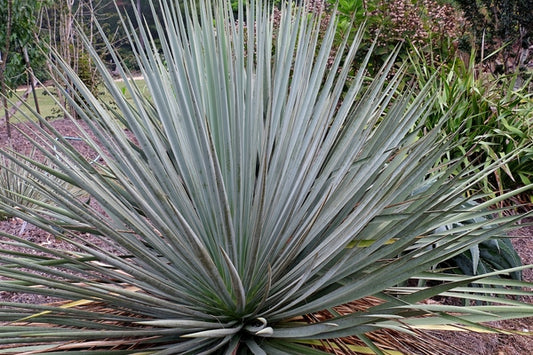
Agave striata is an easy-to-grow century plant that looks quite different from the wider leaf types with its narrow, rounded, grey-green, knitting needle-like leaves that are stiff and delightfully painful. Ask your friends to weed around this one for some real laughs! The initial rosettes are 18" tall x 3' wide, but after the 8' tall flower stalks of hummingbird-favorite flowers finish in midsummer, the rosette branches and continues to grow, eventually creating a stack of porcupine-like balls. Hailing from the Sierra Madre Orientale mountain range in northeast Mexico, Agave striata has good winter hardiness and has been fine at 0 degrees F in our garden. Pot Size: 3.5" (24 fl. oz/709.77 ml)
This seed collection of the dwarf Agave toumeyana ssp. bella hails from Gila County (north of Phoenix), Arizona at 4,100' elevation, where it covers the faces of large rocky cliffs, growing alongside Agave chrysantha. The cute, small, offsetting 6" tall x 10" wide rosettes are composed of narrow dark green leaves, highlighted with random straight white lines that look like someone's been snorting coke from the foliage. This form of Agave toumeyana ssp. bella has performed very well in our cold damp winters provided it is planted at an angle and has good drainage. Agave toumeyana ssp. bella is eventually topped with short 4' tall spikes of small flowers...a hummingbird favorite. Pot Size: 3.5" (24 fl. oz/709.77 ml)
Agave 'Kazo Bana' is one of the best of the gold-edged forms of Agave victoriae-reginae. Kazo Bana, which means "flower of Kazo," was named by Japanese variegated plant guru, Yoshimichi Hirose. Our 3-year-old plants are now 3" tall x 5" wide, but we expect them to mature at 10" tall x 18" wide with age...great age. The tight, slowly offsetting clumps of Agave victoriae-reginae 'Kazo Bana' are composed of thick, dark green leaves highlighted by a butterscotch-gold border and topped with attractive white markings. Although most Agave victoriae-reginae are hardy to Zone 7b, I'd recommend growing this to a larger size before trying it outdoors north of warm zone 8. Agave flowers attract hummingbirds. Pot Size: 3.5" (24 fl. oz/709.77 ml)
I first saw this agave when visiting the late Gary Hammer's California nursery...a plant Gary discovered in Mexico, which became variegated upon his return home. This deliciously wicked little agave is a selection of Agave x leopoldii (Agave filifera v. filifera x Agave filifera v. schidigera) that forms an 8" tall x 15" wide clump of 0.25" wide bayonet-like, dark green leaves, each etched in white, edged with a chartreuse border, then covered in curly white hairs that would make Santa proud. Agave 'Hammer Time' does offset occasionally, unlike both of its parents. Growing this gem is a bit like having a pet porcupine, so handle with care. We named this in memory of Gary, who was killed in an auto accident in 2011 at age 57. Pot Size: 3.5" (24 fl. oz/709.77 ml)
This non-offsetting gem is one of the rarest and most beautiful agaves in our collection. Finally, we have enough of this exotic variegated beauty to share. This 30" wide selection of Agave xylonacantha (xylonacantha means "wood teeth/spines") is composed of 18" long x 1" wide leaves which form a symmetrical clump. Each leaf has a medium green central stripe, bordered by a wide creamy yellow edge that ages to white. The unusual snaggle-tooth spine pattern on the leaf edge is truly fascinating. If you live in a state with gun bans, keep a leaf from this baby by the bed for protection. We're on the northern borderline for growing this species outdoors, so from here north, enjoy yours as a container plant. Eventually the fragrant agave flowers will attract hummingbirds to your patio. Pot Size: 3.5" (24 fl. oz/709.77 ml)
We had already grown Aloe aristata for several years outdoors before I was fortunate to spot it in the wild on my 2005 South African expedition at nearly 9,000' elevation. Here, it grew wedged in the rocks on a nearly sheer cliff face. In cold climates, do not plant Aloe aristata out in the open where rains can soak it during the winter months. Planting Aloe aristata near a hedge or large shrub where it can still get afternoon sun is perfect. The 9-year-old clump in our rock garden is now 6" tall x 15" wide, composed of haworthia-like rosettes of stiff green leaves. Aloe aristata clumps are topped in May with 2' tall spikes of attractive, orange, bell-like flowers. Pot Size: 3.5" (24 fl. oz/709.77 ml)
Amorphophallus arcuspadix is a new (2012) species of Amorphophallus from an Alan Galloway discovery in Bolikhamxay Province, Laos, where it was growing in shaded areas among limestone boulders. Amorphophallus arcuspadix is closely related to Amorphophallus verticillatus. The 1' tall stalks, which are topped with typical amorphophallus foliage, multiply by stoloniferous offsets to form a small colony of stalks. The stalks of white inflorescences strongly resemble Amorphophallus verticillatus, except for the strongly arched spadix. Pot Size: 3.5" (24 fl. oz/709.77 ml)
This stunningly beautiful Amorphophallus atroviridis is found on rocky cliffs in north central Thailand around the town of Sara Buri. The 18" tall, reddish brown (often speckled) stalks are topped with wide-lobed, black leaves, surrounded by a bright red border. The summer-borne inflorescence sits atop a short flowering stalk and resembles a small pink cup that holds a well-sized spare part for a urology transplant. Thanks to amorphophallus guru, Alan Galloway, for making this offer possible. Pot Size: 3.5" (24 fl. oz/709.77 ml)
Amorphophallus atroviridis 'Pewterware' is a Plant Delights selection of the north central Thailand species that typically has black foliage. The foliage on Amorphophallus 'Pewterware' is, as you can no doubt surmise, pewter, surrounded by a narrow red edge. The 1' tall stalks are speckled reddish brown. The summer-borne inflorescence sits atop a short flowering stalk and resembles a small pink cup that holds a well-sized spadix. This is a very limited offering. Pot Size: 3.5" (24 fl. oz/709.77 ml)