

How can you not love plants that eat bugs? Some of the most fascinating, exotic and bizarre organisms in the plant kingdom are the carnivorous plants whose leaves have evolved into traps that capture and digest animal prey. Learn how to grow carnivorous plants.
-
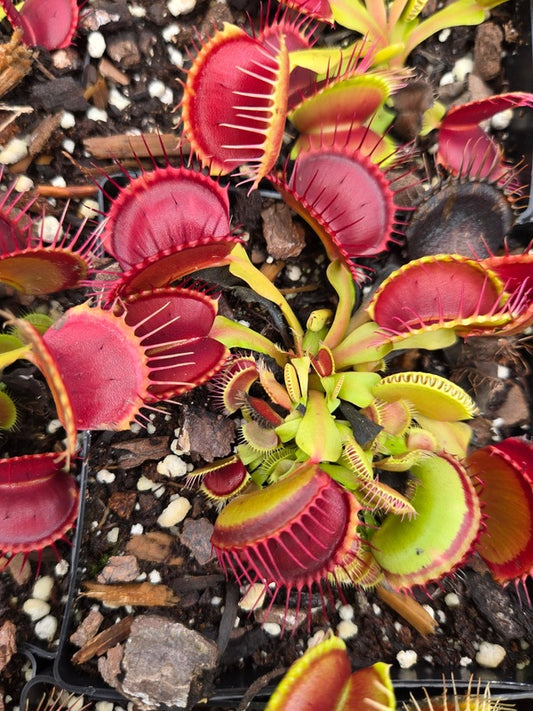
Dionaea muscipula 'Akai Ryu'
Item #: 4107
Zones: 5a to 9b
Dormancy: Winter
Height: 4" tall
Culture: Sun
Origin: United States
Pot Size: 3.5" pot (24 fl. oz/0.7 L)
Regular price $27.00Regular priceUnit price per -
 Sold out
Dionaea muscipula 'B-52'
Item #: 17899
Zones: 5a to 9b
Dormancy: Winter
Height: 4" tall
Culture: Sun
Origin: United States
Pot Size: 3.5" pot (24 fl. oz/0.7 L)
Regular price $30.00Regular priceUnit price per -
Dionaea muscipula 'Dente'
Item #: 4109
Zones: 5a to 9b
Dormancy: Winter
Height: 4" tall
Culture: Sun
Origin: United States
Pot Size: 3.5" pot (24 fl. oz/0.7 L)
Regular price $30.00Regular priceUnit price per -
Dionaea muscipula 'King Henry'
Item #: 3700
Zones: 5a to 9b
Dormancy: Winter
Height: 6" tall
Culture: Sun
Origin: United States
Pot Size: 3.5" pot (24 fl. oz/0.7 L)
Regular price $30.00Regular priceUnit price per -
Dionaea muscipula 'Red Piranha'
Item #: 17900
Zones: 5a to 9b
Dormancy: Winter
Height: 4" tall
Culture: Sun
Origin: United States
Pot Size: 3.5" pot (24 fl. oz/0.7 L)
Regular price $30.00Regular priceUnit price per -
Sarracenia alata 'Purple Peeper'
Item #: 9377
Zones: 5a to 9b
Dormancy: Winter
Height: 24" tall
Culture: Sun to Part Sun
Origin: United States
Pot Size: 3.5" pot (24 fl. oz/0.7 L)
Regular price $29.00Regular priceUnit price per -
Sarracenia 'Blood Orange'
Item #: 11386
Zones: 5a to 9b
Dormancy: Winter
Height: 24" tall
Culture: Sun to Part Sun
Origin: United States Hybrid
Pot Size: 3.5" pot (24 fl. oz/0.7 L)
Regular price $45.00Regular priceUnit price per -
Sarracenia 'Bog Witch'
Item #: 12758
Zones: 5a to 9b
Dormancy: Winter
Height: 20" tall
Culture: Sun to Part Sun
Origin: United States Hybrid
Pot Size: 3.5" pot (24 fl. oz/0.7 L)
Regular price $32.00Regular priceUnit price per -
Sarracenia 'Boob Tube'
Item #: 13738
Zones: 5b to 9b, at least
Dormancy: Winter
Height: 12" tall
Culture: Sun to Part Sun
Origin: United States Hybrid
Pot Size: 3.5" pot (24 fl. oz/0.7 L)
Regular price $32.00Regular priceUnit price per -
Sarracenia 'Bug Bat'
Item #: 11736
Zones: 5b to 9b, at least
Dormancy: Winter
Height: 16" tall
Culture: Sun to Part Sun
Origin: United States Hybrid
Pot Size: 3.5" pot (24 fl. oz/0.7 L)
Regular price $30.00Regular priceUnit price per -
Sarracenia x chelsonii 'Barba Green'
Item #: 17891
Zones: 5a to 9b
Dormancy: Winter
Height: 12" tall
Culture: Sun to Part Sun
Origin: United States Hybrid
Pot Size: 3.5" pot (24 fl. oz/0.7 L)
Regular price $30.00Regular priceUnit price per -
Sarracenia 'Daina's Delight'
Item #: 5246
Zones: 5a to 9b
Dormancy: Winter
Height: 24" tall
Culture: Sun to Part Sun
Origin: United States Hybrid
Pot Size: 3.5" pot (24 fl. oz/0.7 L)
Regular price $30.00Regular priceUnit price per -
Sarracenia 'Dixie Lace'
Item #: 3060
Zones: 5a to 9b
Dormancy: Winter
Height: 12" tall
Culture: Sun to Part Sun
Origin: United States Hybrid
Pot Size: 3.5" pot (24 fl. oz/0.7 L)
Regular price $30.00Regular priceUnit price per -
Sarracenia 'Doodlebug'
Item #: 5969
Zones: 5a to 9b
Dormancy: Winter
Height: 8" tall
Culture: Sun to Part Sun
Origin: United States Hybrid
Pot Size: 3.5" pot (24 fl. oz/0.7 L)
Regular price $30.00Regular priceUnit price per -
Sarracenia flava
Item #: 1012
Zones: 5a to 9b
Dormancy: Winter
Height: 30" tall
Culture: Sun to Part Sun
Origin: United States
Pot Size: 3.5" pot (24 fl. oz/0.7 L)
Regular price $30.00Regular priceUnit price per -
Sarracenia x leucopurea 'Fiona'
Item #: 17901
Zones: 5a to 9b
Dormancy: Evergreen
Height: 12" tall
Culture: Sun to Part Sun
Origin: United States Hybrid
Pot Size: 3.5" pot (24 fl. oz/0.7 L)
Regular price $30.00Regular priceUnit price per
-
Sarracenia Mixed Garden Seedlings
Item #: 18094
Zones: 5a to 9b
Dormancy: Winter
Height: 24" tall
Culture: Sun to Part Sun
Origin: United States Hybrid
Pot Size: 3.5" pot (24 fl. oz/0.7 L)
Regular price $0.00Regular priceUnit price perThis plant is available for JLBG Members only.
-
Sarracenia x moorei 'Conversation Piece'
Item #: 8350
Zones: 5a to 9b
Dormancy: Winter
Height: 28" tall
Culture: Sun to Part Sun
Origin: United States Hybrid
Pot Size: 3.5" pot (24 fl. oz/0.7 L)
Regular price $30.00Regular priceUnit price per -
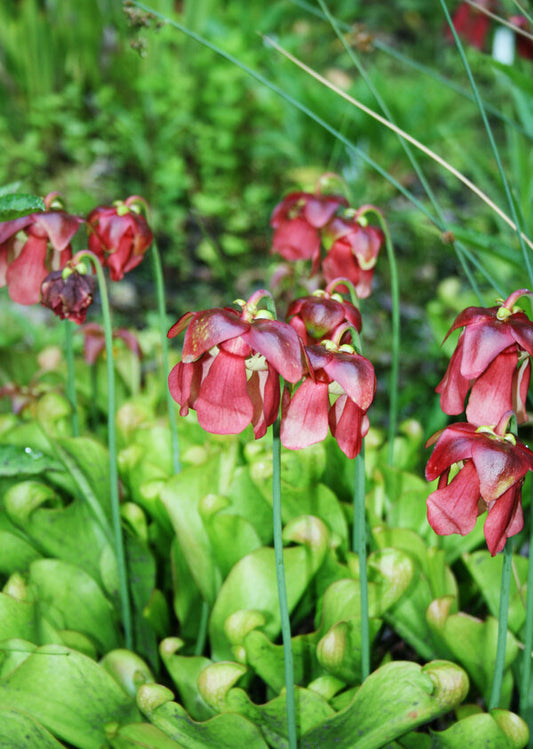
Sarracenia x moorei 'Red Saucers'
Item #: 18300
Zones: 5a to 9b
Dormancy: Winter
Height: 28" tall
Culture: Sun to Part Sun
Origin: United States Hybrid
Pot Size: 3.5" pot (24 fl. oz/0.7 L)
Regular price $35.00Regular priceUnit price per -
 Sold out
Sarracenia psittacina
Item #: 1314
Zones: 5a to 9b
Dormancy: Winter
Height: 6" tall
Culture: Sun to Part Sun
Origin: United States
Pot Size: 3.5" pot (24 fl. oz/0.7 L)
Regular price $30.00Regular priceUnit price per -
Sarracenia x readii
Item #: 12666
Zones: 5a to 9b
Dormancy: Winter
Height: 15" tall
Culture: Sun to Part Sun
Origin: United States Hybrid
Pot Size: 3.5" pot (24 fl. oz/0.7 L)
Regular price $30.00Regular priceUnit price per -
Sarracenia 'Redbug'
Item #: 5754
Zones: 5a to 9b
Dormancy: Winter
Height: 12" tall
Culture: Sun to Part Sun
Origin: United States Hybrid
Pot Size: 3.5" pot (24 fl. oz/0.7 L)
Regular price $30.00Regular priceUnit price per -
Sarracenia x rehderi
Item #: 3461
Zones: 5a to 9b
Dormancy: Winter
Height: 14" tall
Culture: Sun to Part Sun
Origin: United States
Pot Size: 3.5" pot (24 fl. oz/0.7 L)
Regular price $30.00Regular priceUnit price per -
Sarracenia 'Ritchie Bell'
Item #: 9886
Zones: 5a to 9b
Dormancy: Winter
Height: 24" tall
Culture: Sun to Part Sun
Origin: United States Hybrid
Pot Size: 3.5" pot (24 fl. oz/0.7 L)
Regular price $35.00Regular priceUnit price per









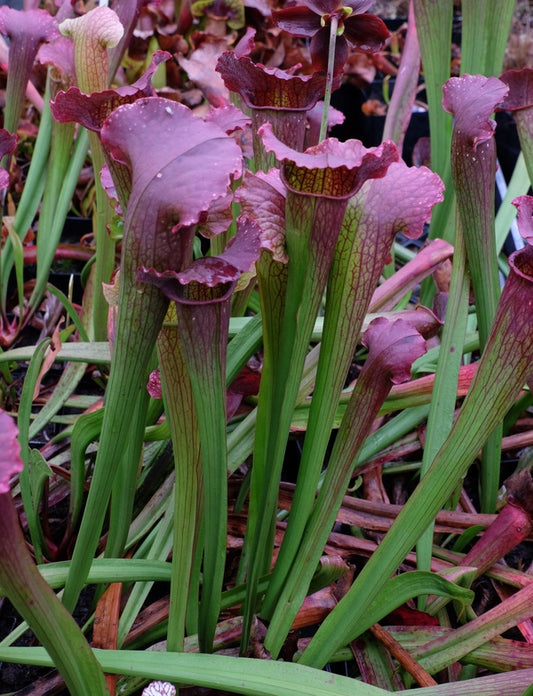
More Information About Carnivorous plants
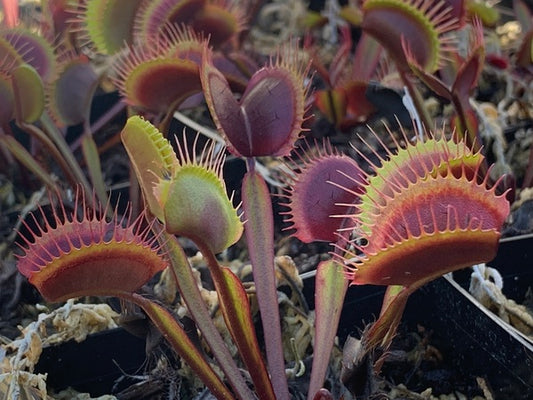
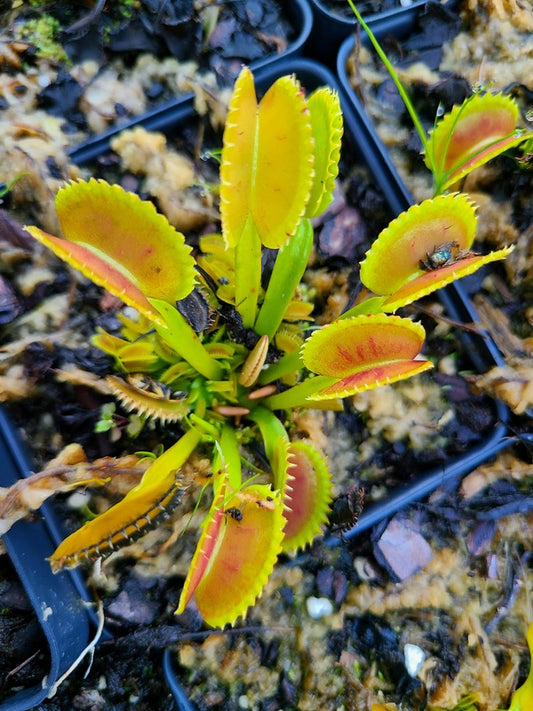
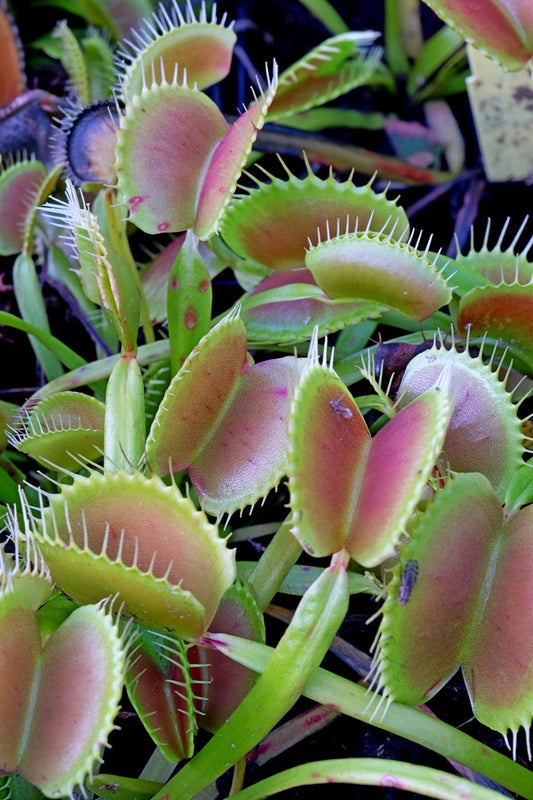
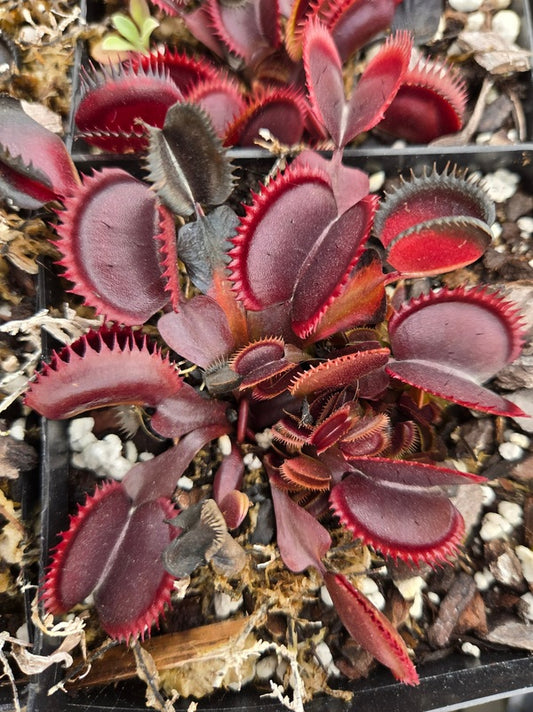
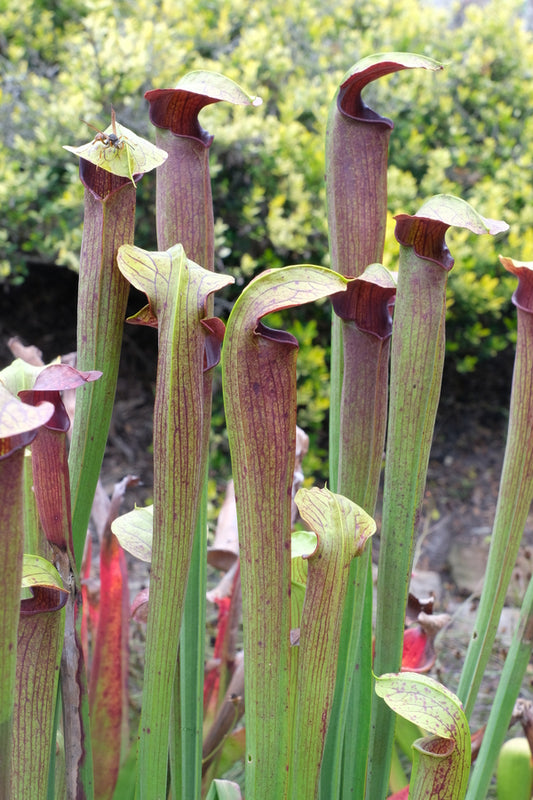
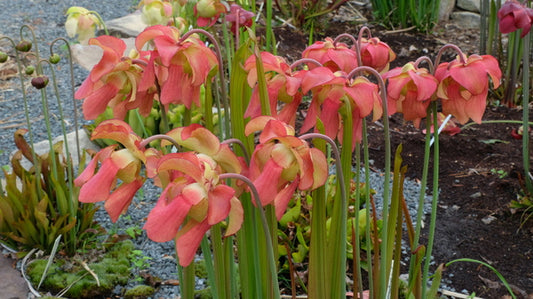
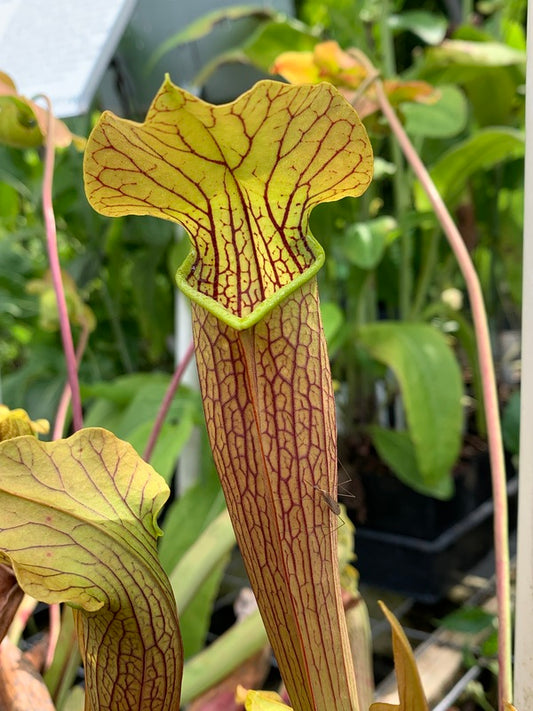
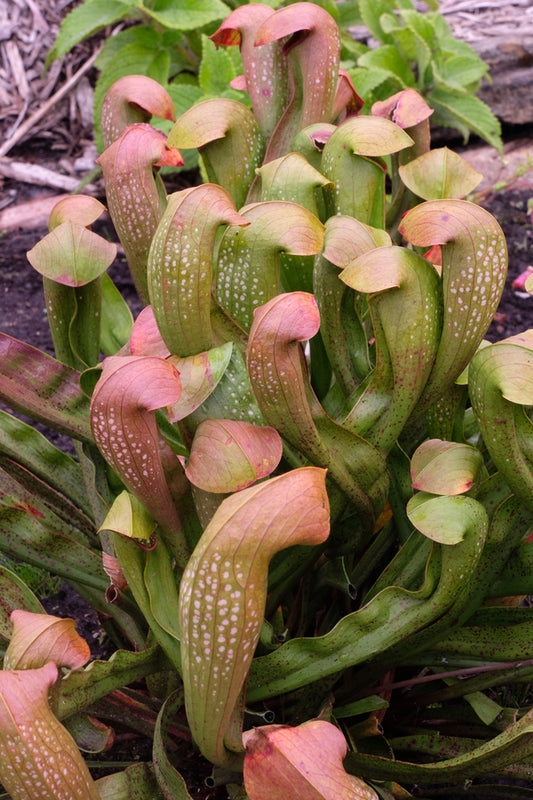
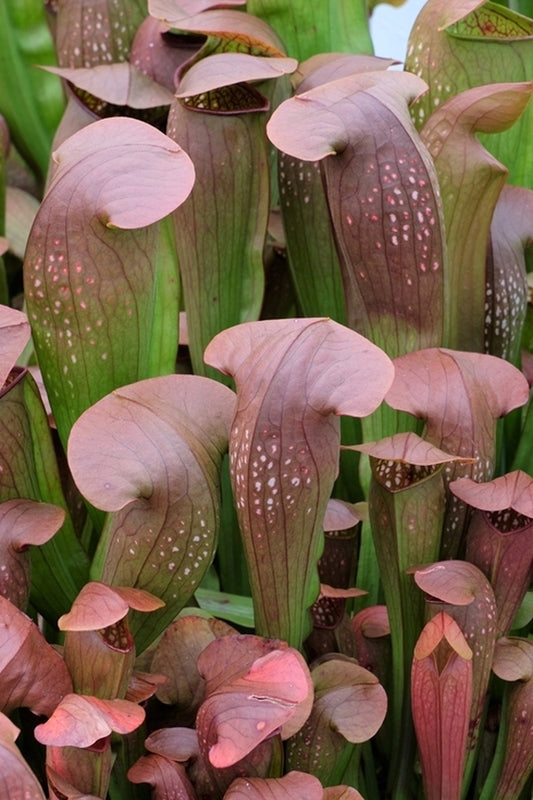
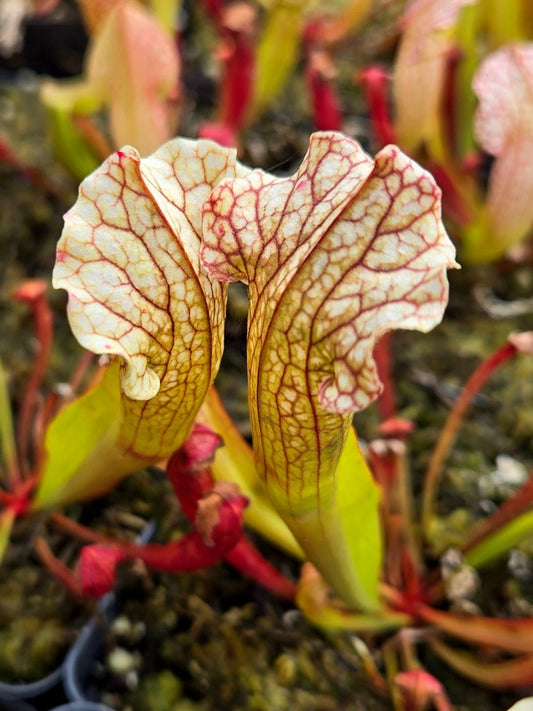
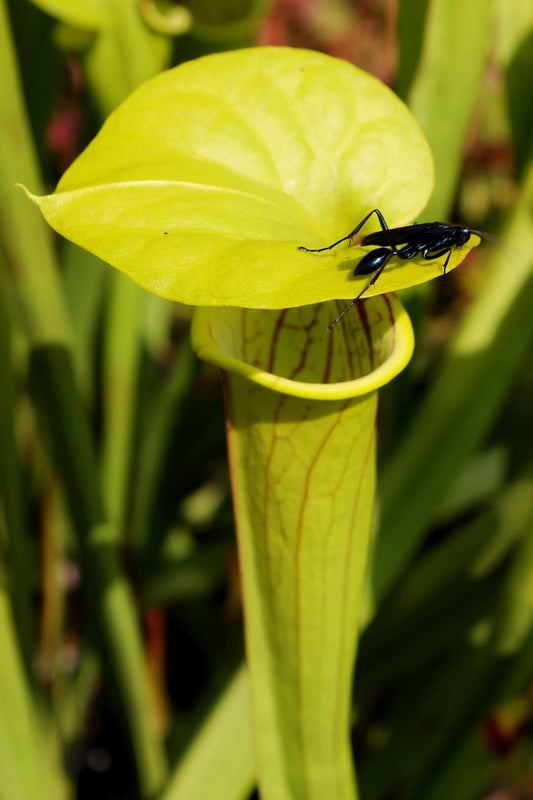
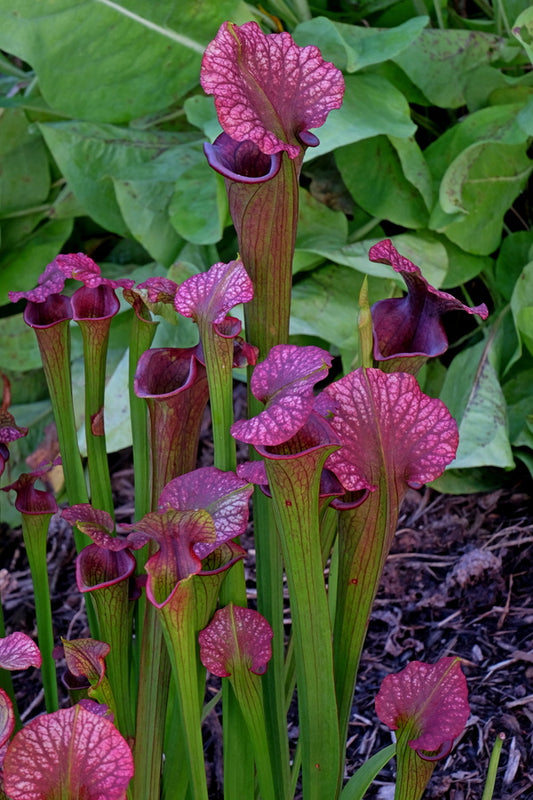
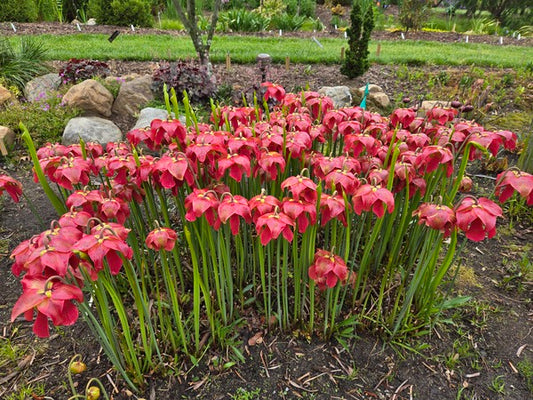
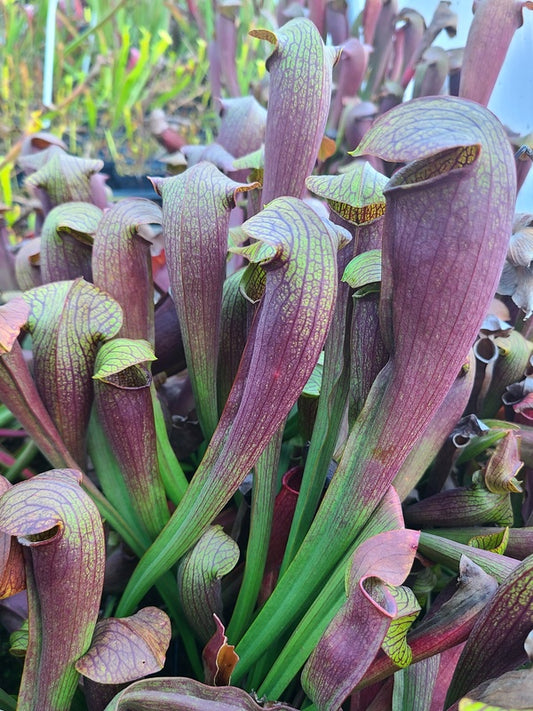
Here at Plant Delights Nursery, we love plants that eat bugs, and we think you will too. A few of the carnivorous plants for sale here at Plant Delights Nursery include Sarracenia (Pitcher Plant), Drosera (Sundew), and Dionaea (Venus fly trap).
Some of the most fascinating, exotic and bizarre organisms in the plant kingdom are the carnivorous plants whose leaves have evolved into traps that capture and digest animal prey...i.e. they are plants that eat meat, bugs, and insects.
A carnivorous plant such as a pitcher plant and venus flytrap, catch and eat insects, small animals and protozoans for one reason...protein, and the nitrogen in it. Normally, a plant absorbs nitrogen from the soil through its roots, but certain environments such as acidic bogs and rock outcroppings lack chemically available forms of nitrogen. Carnivorous plants (insect eating plants) live in these areas and survive by capturing an animal in a trap (a modified leaf), digesting the prey with enzymes, extracting nitrogen from the protein, and absorbing the nitrogen into the plant. Insect eating plants may also extract the mineral elements phosphorus, potassium, calcium and iron this way, too.
In order to be considered a true insect eating carnivorous plant, a plant has to both capture and digest its prey and there are over 600 species that fit this strict definition. Included in this group are some plants that we sell here at Plant Delights Nursery such as Venus Flytrap (Dionaea), Pitcher Plant (Sarracenia) and Sundew (Drosera). There are also quasi-carnivorous plants like Silene (Catchfly) and Puya that do not fit the strict definition of a carnivorous plant but do kill insects or birds and then obtain some of their nutrients.
Contrary to what Hollywood implies, there are no meat eating plants on the hunt for humans. Plants like Audrey, Jr (Little Shop of Horrors) and triffids (Day of the Triffids) are purely works of fiction.
How to Grow Carnivorous Plants
-
The key is to grow plants that eat insects in bog garden conditions with damp feet, but dry ankles. Pitcher plants, Venus Flytraps, and most carnivorous plants are easy to kill if they are kept too wet at the surface.
-
In containers, 100% peat moss is perfect...which is how we grow carnivorous plants here at the nursery.
-
Do not fertilize your carnivorous plant. Irrigating with tap water (which often contains heavy salts) can also be a problem for plants that eat insects. We use well water or recycled rain water.
-
Other than removing the dead foliage, insect eating carnivorous plants require little care and are perfect for the low-maintenance gardener.
When you are ready to buy carnivorous plants for your garden, check out our online list of unique bog plants and carnivorous plants for sale here at Plant Delights Nursery. And when you do buy a carnivorous plant, please choose an ethical carnivorous plant nursery (like us) that only sells ethically produced plants that do not harm the last remaining native habitats of these endangered beauties.
Additional Carnivorous Plant Resources
Interested in learning more about bug eating plants? Or maybe you would like to start your own bog garden. If so, check out our article on how to build a pitcher plant bog and our article about one of our favorite carnivorous plants, the Pitcher Plant.
Tony also has numerous blog posts featuring carnivorous plants over at the Juniper Level Botanic Garden blog.